
On a Philippine island, indigenous groups take the fight to big palm oil

Palm oil tramples indigenous people's rights.

  • Many Palawan indigenous communities say they have suffered unfair land acquisition or lease arrangements for oil palm plantations. The situation hit a peak around 2007, when palm oil company Agumil Philippines promoted palm oil around the island as a miracle get-rich-quick crop.
  • Many tribal landowners leased or sold parcels of land to Agumil. Those who leased said they were provided loans from the government-run Land Bank of the Philippines, negotiated by Agumil, to clear the land and plant oil palm saplings. Title deeds to the leased land were lodged with the bank as collateral against the loans, where they remain.
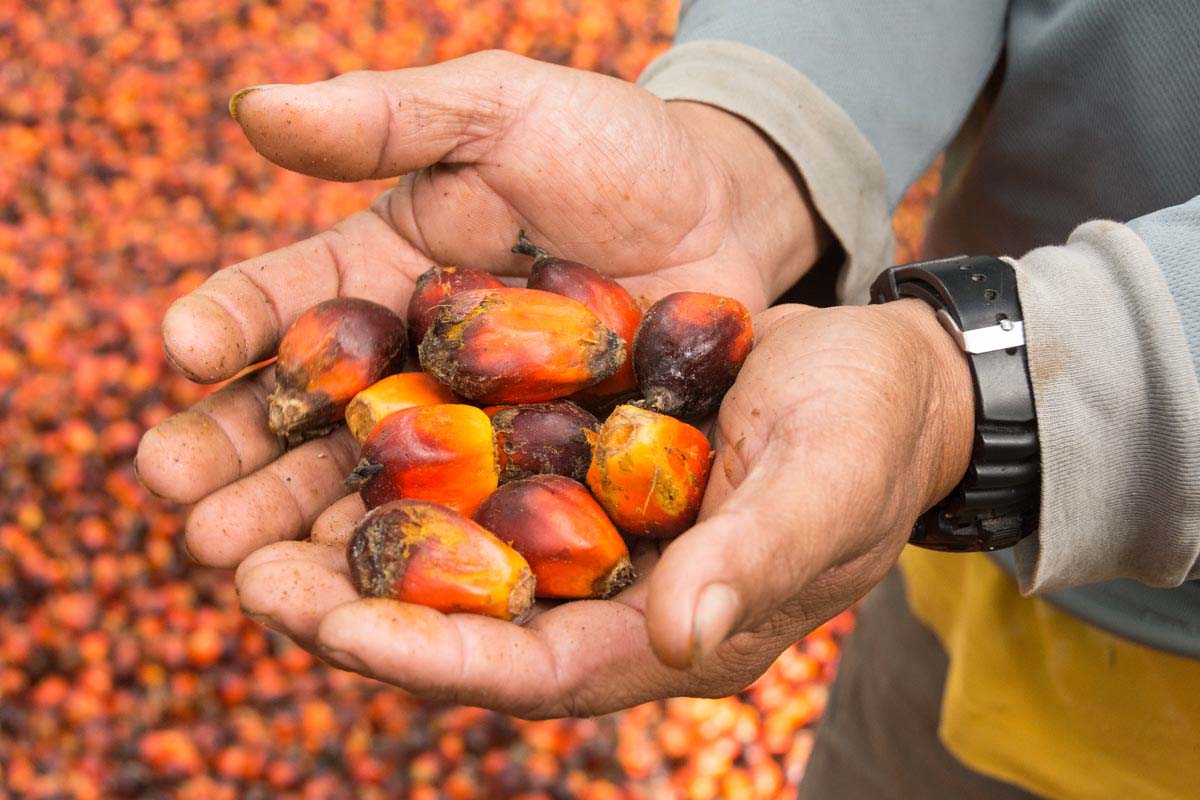
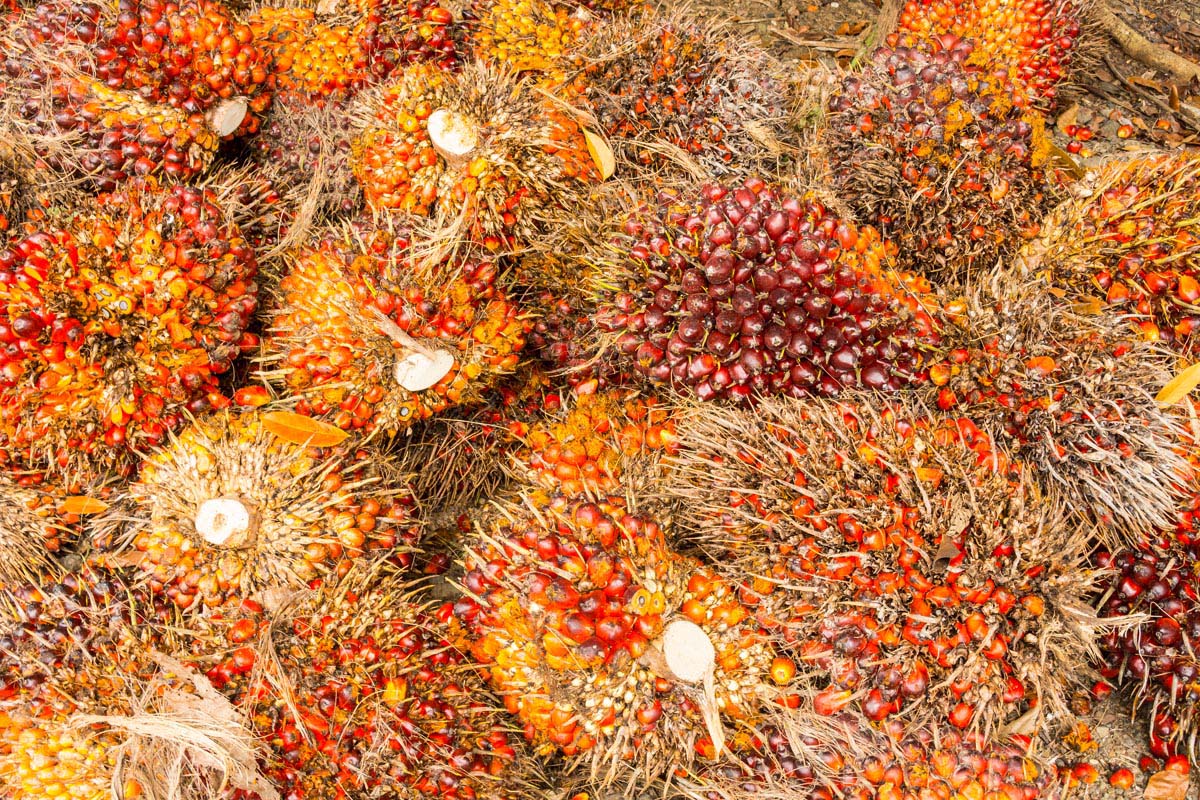
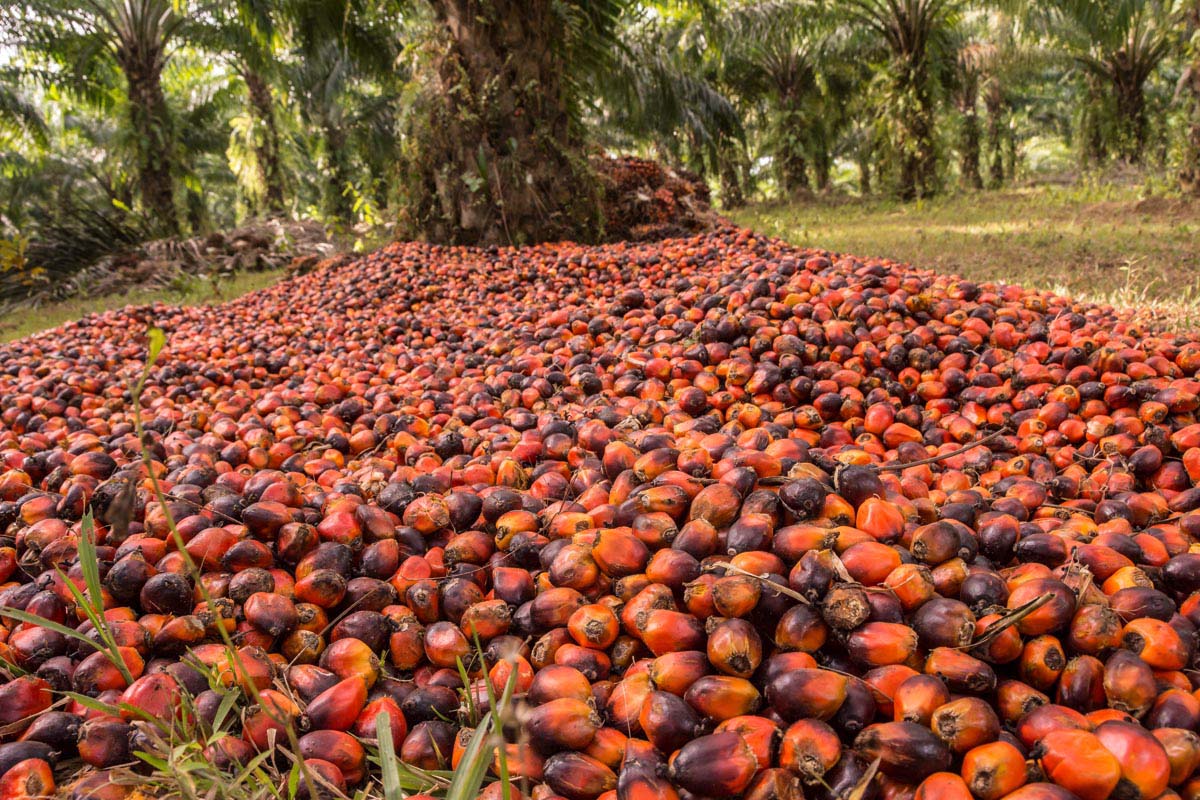
  • Today the plantations are producing plentiful bunches of oil palm fruit. Still, landowners say they have yet to see any financial returns on their leased land. The problem all cite is that the loans came with crippling 14 percent annual interest rates, which left the original loan amounts inflating out of control. The terms of the lease contracts also stipulate that ongoing operational and managements costs be subtracted from the loan and harvest income.
  • Now tribal groups are fighting back on multiple fronts. A tribal representative in the municipality of Rizal recently won a mayoral election. The re-elected mayor of neighboring Brooke’s Point has also pledged a halt to more oil palm plantations. Three of the seven municipalities in southern Palawan have now placed limitations on oil palm cultivation.

The sandy path from the village of bamboo houses winds down through the coconut palms, which gives way to mangroves growing along the muddy shoreline. The seven elders inspect their fishing boats. Hand-built using timber from their communal forest, the small craft have bamboo outriggers to keep them stable in the open sea.

The Sarong community on the island of Palawan in the Philippines has for generations been living a similar way of life from the forest, cultivated fields, stands of coconut and fishing. But a few years ago, in 2012, their lives were turned upside down when they noticed that their communal forest was being logged and cleared without any consultation, let alone their permission.

“A contractor coming from another barangay [village] was clearing the land,” says Romeo L. Japson, who grew up in the community.

Community members say the company responsible then went on to plant oil palm saplings on 200 hectares (500 acres) of their ancestral land. They add that now, every time they pass by the plantation, they’re reminded of how their community forest was razed. To this day they are bitter that the situation persists and they have no redress.

They are not alone, as many other Palawan indigenous communities have also suffered what they see as unfair land acquisition or lease arrangements for oil palm plantations. The situation hit a peak around 2007, when palm oil company Agumil Philippines promoted palm oil around the island as a miracle get-rich-quick crop. Twenty-five percent Filipino- and 75 percent Malaysian-owned, Agumil is a subsidiary of Agusan Plantations (API) and operates the only palm oil processing plant on Palawan.

Now tribal groups are fighting back on multiple fronts. A tribal representative in the municipality of Rizal recently won a mayoral election. The re-elected mayor of neighboring Brooke’s Point has also pledged a halt to more oil palm plantations. Three of the seven municipalities in southern Palawan have now placed limitations on oil palm cultivation.

Meanwhile, a growing number of communities are responding to threats to their ancestral domains by pursuing legal recognition of their community land and water resources. Two communities celebrated success in 2018, and at least 12 more claims are in process.

Tribal land appropriation

Many tribal landowners leased or sold parcels of land to Agumil. Those who leased said they were provided loans from the government-run Land Bank of the Philippines, negotiated by Agumil, to clear the land and plant oil palm saplings. Title deeds to the leased land were lodged with the bank as collateral against the loans, where they remain.

“Until now I am riding only in my thongs,” said Mily Saya, landowner and member of the village cooperative in the barangay of Aramaywan. He explains how early company promises of a car and stone house failed to materialize. He says he “has no idea how to get back the land title” for his 4.7 hectares (11.6 acres) from the Land Bank.

“I don’t know how big the loan is from the Land Bank,” he says, explaining how the company planted oil palm seedlings on 1 hectare (2.5 acres) of his land but abandoned the rest with no explanation.

In time, the saplings matured and today the plantations are producing plentiful bunches of oil palm fruit. Still, members of the landowner cooperatives say they have yet to see any financial returns on their leased land. The problem all cite is that the loans came with crippling 14 percent annual interest rates, which left the original loan amounts inflating out of control. The terms of the lease contracts also stipulate that ongoing operational and managements costs be subtracted from the loan and harvest income.

“You will become a rich man,” Larry Arcuyo says he and other landowners were promised, “before entering into contracts” with Agumil. Arcuyo chairs the Aramaywan farmers’ cooperative, one of 14 such growers’ cooperatives on the island. He says Aramaywan has 26 members who have leased land to Agumil. “There are rich men in Palawan — rich of debt,” he says. “We are praying that someone helps us to resolve that problem.

“From the start almost 11 years [ago], the landowners have never seen any money even through the harvesting started eight years ago … Some landowners already died in the meantime,” Arcuyo says. He adds that the price per kilo of palm fruit set by Agumil “is already very low.” Even then, he says, this payment never reaches the farmers who have leased their land to the company; instead, “it is given to the Land Bank for settling the debt,” including for preparation of the land and the initial seedlings. “All decisions regarding finances are controlled by the company,” Arcuyo says.

According to the Coalition against Land Grabbing (CALG), a local indigenous organization campaigning for indigenous people’s rights, 9,000 hectares (22,200 acres) in Palawan have been cleared for oil palm plantations, and the government is inviting foreign investors to develop more. Agumil spokesman Eric Ang told Mongabay, “We intend to expand our business in the oil palm industry but for now we are consolidating in Palawan.”

CALG says that if rules and regulations had been implemented properly, Agumil would never have been able to develop its plantations in the first place. It claims the Philippines’ Indigenous Peoples’ Rights Act (IPRA Law) has been ignored, and that the Palawan Council for Sustainable Development (PCSD) has failed to implement its Strategic Environmental Plan as required under a 1992 act. The group also says that environmental compliance certificates should never have been issued to palm oil companies by the Department of Environment and Natural Resources. The department did not respond to an email request to comment from Mongabay.

Arbitration between tribes and company

The Palawan Palm Oil Industry Development Council (PPOIDC), a multi-stakeholder industry body, is seeking a solution to the ongoing disagreements. However, four meetings “resulted in deadlock,” according to the minutes of the most recent meeting, held last November, and an agreement has still not been reached.

According to lease agreements obtained by Mongabay, Agumil offered a land rental rate of 17,000 pesos ($333) per hectare for a 10-year period, amounting to 1,000 to 2,000 pesos ($20 to $40) per hectare per year to each landowner. In addition, it offered 200 pesos ($4) per ton for harvested palm fruit.

The price of processed palm oil has been dropping in recent months, and on May 31 stood at $563 per metric ton, the sixth-lowest monthly valuation in the past five years.

It was noted at the PPOIDC meeting that the estimated tonnage of palm oil per hectare was well below that promised to farmers by Agumil at the project initiation. In contrast, the palm oil cooperatives demanded a signing bonus of 20,000 pesos ($400), production sharing of 400 pesos ($8) per metric ton, and land lease rental of 10,000 pesos ($200) per hectare per year.

The meeting recommended that Agumil reconsider its offer to the cooperatives and if still no agreement could be reached, the committee should “render a report to the committee on Cooperatives, House of Representatives, and recommend/request Congress to provide legal assistance to the Palm Oil Cooperatives for the filing of appropriate case, a class suit against Agumil.”

It also recommended that the “Top management of the Landbank of the Philippines conduct a thorough investigation on the various accounts of the Oil Palm Cooperatives and possibly cooperate with the Oil Palm Cooperatives in filing appropriate legal charges against Agumil.”

Back in 2015, only one co-op had already repaid its loan and four were up-to-date with payments and on course for full repayment by 2023. Seven, however, needed loan restructuring and two had defaulted on their repayments. Restructuring in previous meetings had involved interest rate reductions from 14 percent to 7 percent, and the management fee charged by Agumil reduced from 10 percent to between 2.5 and 5 percent.

Summing up, board member B.M. Rama said that, “with what had happened to this industry, somebody must be [held] responsible and liable to this problem and that this case should be brought to the proper forum which is the court.”

Asked by Mongabay whether Agumil would be improving terms to co-ops in future, Ang said: “There is no change in the terms and conditions of the Lease Agreement entered between the Coops and the Company.” He maintained that the coops are still liable for a start-up 20 percent equity advance, a matter hotly disputed in the meeting. “We are agreeable to an independent audit of the 20 percent equity advance,” Ang said, adding that none of the co-ops had yet initiated the auditing process.

The idea that the capital debt of the co-ops be assumed by another entity was recommended by a study commissioned by the government’s Cooperative Development Authority. Ang says this “was explored by the Land Bank of Philippines (LBP) and Agumil.” Such a restructuring scheme has yet to be implemented, and according to Ang, would entail a new company assuming the capital debt and a further loan from the Land Bank along with a “processing agreement with Agumil.”

Moratoria stop palm oil plantations

These days, the tribes are getting organized and pursuing ways to seek justice for their lost earnings. Mobilizing to stem the spread of oil palm plantations in Palawan, groups such as CALG have networked with Palawan’s tribal groups to explain the risks of leasing their land. According to CALG chairman Kemil Motalib, the lessons have been learned and nobody is leasing land to Agumil any longer, though some are selling plots in areas where cultivation is still permitted.

There’s another cause for celebration among Palawan’s indigenous communities: the planting of oil palm has been banned in two other provinces in the Philippines, a trend others may follow in the coming months.

“No to expansion of palm oil planting in Rizal for five years,” says Motalib, explaining the substance of the moratorium declared by the Rizal municipal government in October 2018. Motalib, who is from the Tagbanwa tribe, said that a year of painstaking lobbying that included frequent meetings with government officials by CALG members and local indigenous people had finally paid off: “After one year the moratorium was signed by the Municipal Mayor of Rizal,” he says. “Agumil cannot question it because that is ordinance. That is the law made by the municipal government.”

This sense of victory was reinforced by the election of Rizal’s first indigenous mayor. Otol Odi, a member of the Palaw’an tribe, was won the May 13 election, polling nearly twice his nearest rival. Odi, now in his seventies, attracted widespread support among Rizal’s population of 50,000 with his platform of defending the area’s natural resources from big business.

The municipality of Quezon was the first in the Philippines to declare a moratorium on oil palm cultivation, back in 2014. After recent victories, CALG is now pressing for similar moves in the municipalities of Española and Bataraza. When asked by Mongabay whether Agumil would respect the moratoria, Ang said, “We will abide by any rules and regulations imposed by the Government.”

A further challenge to palm oil companies came from the May 16 re-election of Mary Jean Feliciano as mayor of Brooke’s Point. Despite Agumil being headquartered at Maasin near Brooke’s Point, where its processing plant is located, and using the town’s port facilities for exporting palm oil, Mayor Feliciano has pledged no new oil palm plantations in her region. (She says the two existing plantations can stay for now.) When asked what impact this would have on Agumil’s business, Ang said the company was “not aware of Mayor Feliciano’s pledge.”

Recognizing ancestral domain land

In an August 2018 ceremony, ancestral domain titles were awarded to the Tagbanwa tribes in the barangays of Berong and Aramaywan. In all, the titles awarded by the National Commission on Indigenous People (NCIP) covered 31,000 hectares (76,600 acres) of territory, comprising 23,000 hectares (56,800 acres) of land and 8,000 hectares (19,800 acres) of ancestral waters.

“The forest land is inside the ancestral domain because the forest provides many things, such as honey, rattan, and almaciga [Agathis philippinensis] tree resin,” says Sarong resident Romeo Japson. “They are hunting grounds and provide clean water to drink. There are also natural medicines in the forest that can prevent and cure many illnesses.”

After an application has been filed, it is assessed by the NCIP at the national office in Manila. Here the order is issued for a survey of the area to determine parcel size and boundaries.

“Ancestral domain land is the common land of the indigenous peoples. So the indigenous people are claiming their land, no limits to the thousands of hectares that they claimed. They can own that but only communally, not in the name of one person,” Japson says. He adds that marine and mangrove areas can also be applied for under ancestral domain.

However, there are hurdles. According to Motalib, it takes at least five years to process an application, with the domains granted to Berong and Aramaywan the result of “12 years hard work.” Part of this is due to the average cost per application of around 1 million pesos ($19,500), which can take a while to amass. Then there’s the issue of capacity.

“The NCIP is very stretched as there is only one office in the whole of Palawan and only a few staff,” Motalib says.

Despite the obstacles, the number of ancestral domain applications has grown, with 12 currently in the pipeline. CALG has an ambitious program in the works that intends to support three barangays each in the municipalities of Batarazza and Matarazza and six in Quezon, according to Motalib.

After years of struggling against the odds for the rights to their land, the indigenous peoples of Palawan appear to be making progress.

“Ancestral domain is the only way the Katutubo [indigenous peoples] can protect their rights, their land,” Japson says. “It will decide whether they live freely and whether they maintain their own traditions and culture.

“Indigenous people believe if there is a forest, there is food, there is medicine, there is everything else.”

Published by Mongabay.com

  • Palawan, Indigenous people, The Philippines, land rights, forest, mining, palm oil, plantations
  • Palawan, Indigenous people, The Philippines, land rights, forest, mining, palm oil, plantations
  • Palawan, Indigenous people, The Philippines, land rights, forest, mining, palm oil, plantations
  • Palawan, Indigenous people, The Philippines, land rights, forest, mining, palm oil, plantations
  • Palawan, Indigenous people, The Philippines, land rights, forest, mining, palm oil, plantations
  • Palawan, Indigenous people, The Philippines, land rights, forest, mining, palm oil, plantations
  • Palawan, Indigenous people, The Philippines, land rights, forest, mining, palm oil, plantations
  • Palawan, Indigenous people, The Philippines, land rights, forest, mining, palm oil, plantations
  • Palawan, Indigenous people, The Philippines, land rights, forest, mining, palm oil, plantations
  • Palawan, Indigenous people, The Philippines, land rights, forest, mining, palm oil, plantations
  • Palawan, Indigenous people, The Philippines, land rights, forest, mining, palm oil, plantations
  • Palawan, Indigenous people, The Philippines, land rights, forest, mining, palm oil, plantations
  • Palawan, Indigenous people, The Philippines, land rights, forest, mining, palm oil, plantations
  • Palawan, Indigenous people, The Philippines, land rights, forest, mining, palm oil, plantations
  • Palawan, Indigenous people, The Philippines, land rights, forest, mining, palm oil, plantations
  • Palawan, Indigenous people, The Philippines, land rights, forest, mining, palm oil, plantations
  • Palawan, Indigenous people, The Philippines, land rights, forest, mining, palm oil, plantations
  • Palawan, Indigenous people, The Philippines, land rights, forest, mining, palm oil, plantations
  • Palawan, Indigenous people, The Philippines, land rights, forest, mining, palm oil, plantations
  • Palawan, Indigenous people, The Philippines, land rights, forest, mining, palm oil, plantations

An Indonesian forest community grapples with the arrival of the outside world

This article documents the indigenous Mentawai communities of Siberut Island, Indonesia, exploring environmental change, traditional livelihoods and the impact of development projects.

  • Globally recognized for its outstanding biodiversity and unique cultural heritage, the Mentawai Archipelago’s Siberut Island is under increasing pressure
  • Siberut Island, part of the Mentawai archipelago in western Indonesia, is recognized as a U.N. Biosphere Reserve due to its outstanding cultural and ecological value.
  • The traditions of the indigenous Mentawai people, including agroforestry and customary land tenure, have allowed the people of the island live off the forest without depleting it.
  • Roughly half of the island is protected as a national park. The rest, however, has been parceled out for timber and biomass plantations, road building, and the development of a special economic zone including a yacht marina and luxury resort.
Mentawai shaman, Siberut Island, Indonesia rainforest
A Mentawai tribesman on motorbike fords a river on the only trail connecting Madobag village with the coast. There are few vehicles, and most people walk.

DOROGOT, Indonesia — Toikot rises as the golden light of dawn begins to shine on the heavy mist that cloaks the rainforest canopy outside his home in Indonesia’s Siberut Island. The pigs leave their sleeping place under his traditional uma clan house and set out to forage in the forest. Later they will return to the farmstead to eat sago.

Mentawai shaman, Siberut Island, Indonesia rainforest
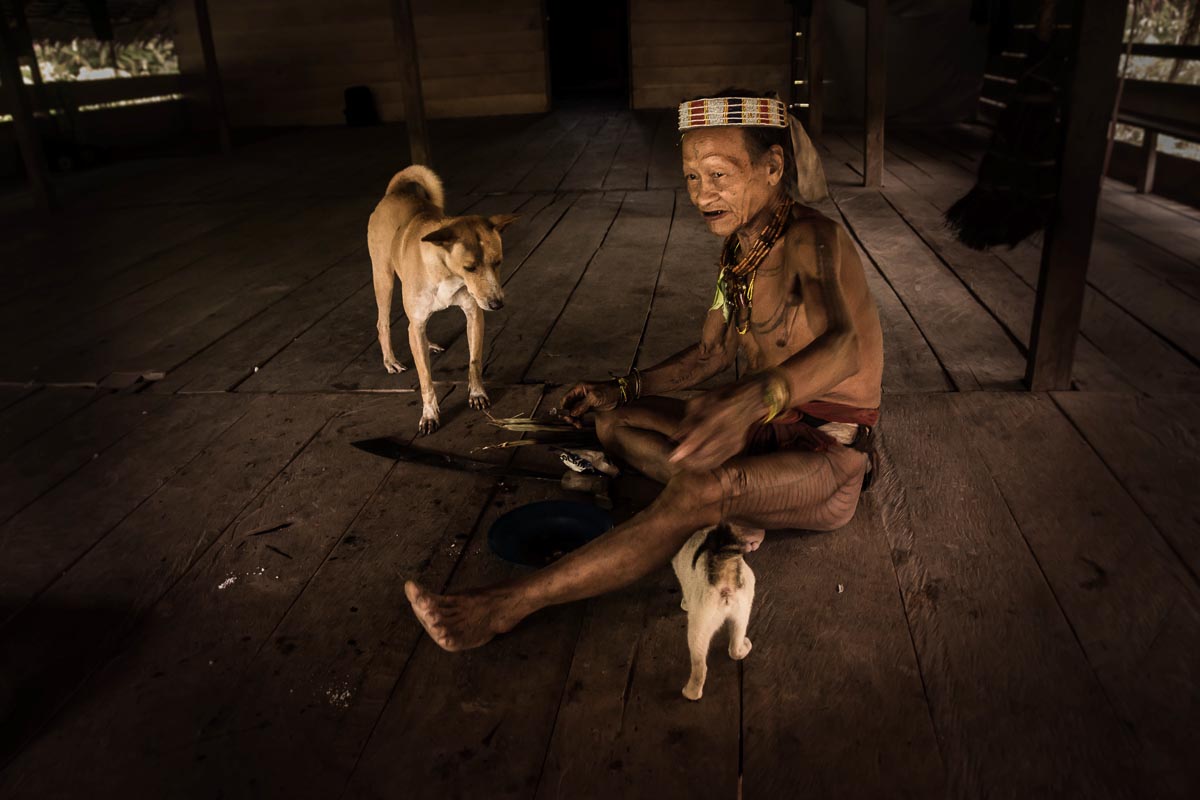
Toikot shaves the woody sago heart into a course flour using his machete. He will then pack it into fresh bamboo stems and roast them over the fire. He is a traditional healer ‘Sekerei’ as denoted by his tattoos and customary dress.

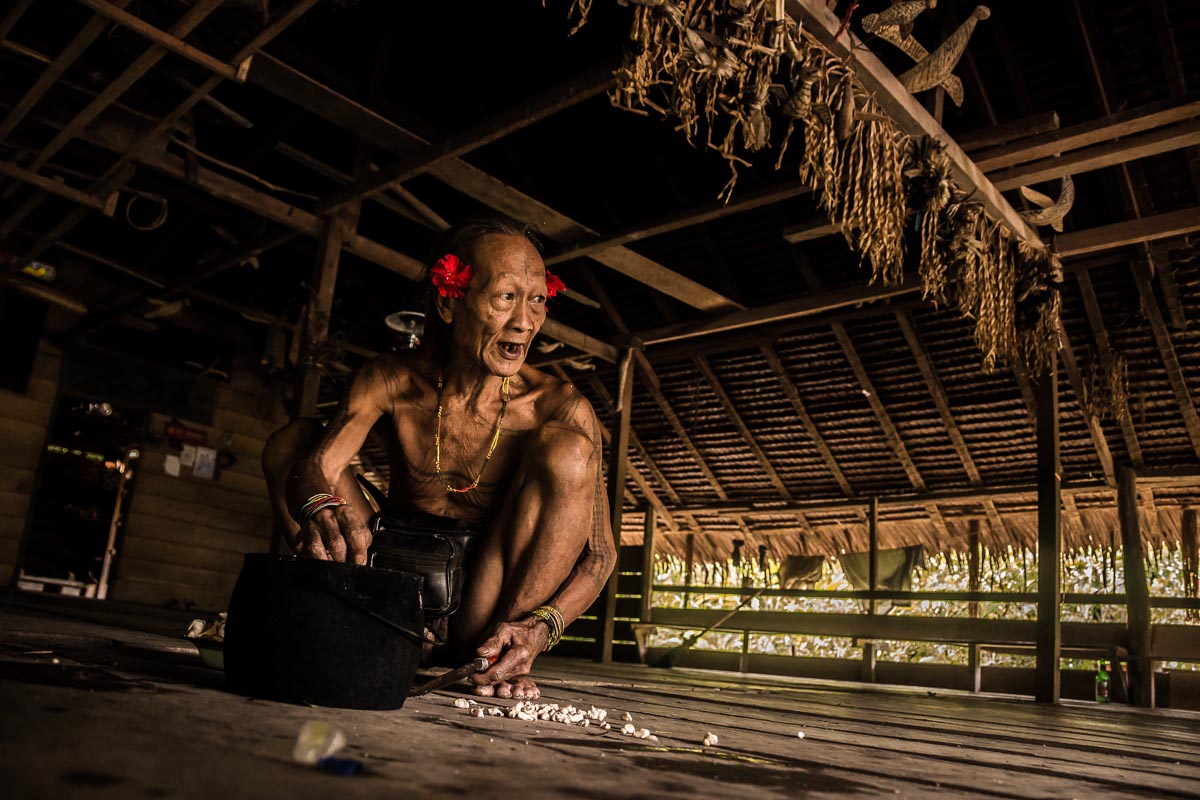
An elderly indigenous Mentawai traditional healer, or sekerei, Toikot’s first task of the day is to gather “something beautiful from nature” with which to adorn himself. Today he plucks two red flowers and places one behind each ear. A loincloth, elaborate tattoos and headdress complete the distinctive customary dress for which the sekerei are known.

Mentawai shaman, Siberut Island, Indonesia rainforest
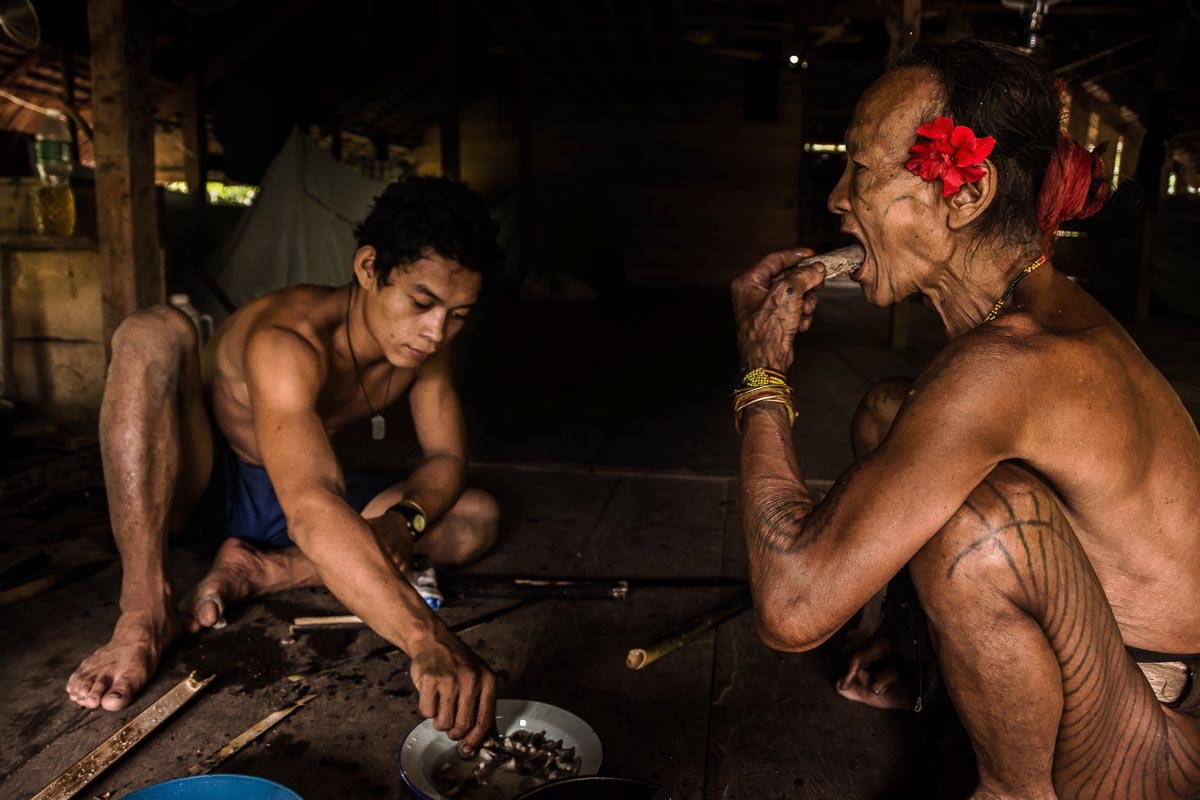
Toikot and his grandson eat sago which has been baked in green bamboo stems. Sago is the staple carbohydrate on which the tribespeople depend. It is extracted from sago palm cut in the forest.

Toikot’s home, the farming community of Dorogot, is a cluster of forest farmsteads on the eastern side of Siberut, around three hours’ walk from the nearest village, mostly through arduous lowland swamp forest.

Mentawai shaman, Siberut Island, Indonesia rainforest
Skulls of hunted monkeys, hornbill and pigs hang from the rafters in an Uma clan house in Dorogot hamlet. Many Mentawai people still follow an old animist belief system of which this decoration is a part.

Siberut is the largest island in the Mentawai archipelago, which lies 140 kilometers (87 miles) west of the Indonesian island of Sumatra. The rainforest-swathed island has been isolated from the rest of Indonesia for half a million years, leading to an unusually high level of endemism. Two-thirds of the animals here are thought to be unique to the island.

Mentawai shaman, Siberut Island, Indonesia rainforest
Toikot is a traditional shaman healer with his animals inside his traditional Uma house. Siberut Island, part of the Mentawai archipelago in western Indonesia, is recognized as a U.N. Biosphere Reserve due to its outstanding cultural and ecological value.

This unique biological and cultural diversity was recognized in 1981 when UNESCO designated the island a Biosphere Reserve. This was consolidated in 1993 when Indonesia’s Ministry of Forestry established Siberut National Park, spanning 1,905 square kilometers (736 square miles) and covering most of the island’s western half.

Mentawai shaman, Siberut Island, Indonesia rainforest
Toikot looks out from his uma house across the forest where he lives in Dorogot hamlet. A traditional Sekerei shaman, the flowers behind his ears comprise part of his traditional dress.

Now, though, both Siberut’s traditional lifestyles and its biodiversity are under pressure from a spate of development projects. While the western half of the island is largely protected, the northeast is already home to a sizable timber concession and a biomass forestry concession. The central government also has big plans to develop a special economic zone in the south, and a highway linking it to the forest concessions in the north. The local government and a private company also plan to bring electricity to villages via a biomass project.

Mentawai shaman, Siberut Island, Indonesia rainforest
Construction of the trans-Mentawai highway in town of Muara.

Land ownership and logging

These development plans are already coming into conflict with indigenous traditions in Siberut.

Mentawai ownership patterns are complex, relying on ancestral history passed orally from one generation to the next. Land tenure is deeply entwined with extended family clan kinship patterns, which create ties between the indigenous Mentawai people. “A land certificate is not so important as here we don’t sell the land. We know the story about the land, so that’s like a certificate,” says Fransiskus Samapoupou from Madobag village, echoing a widely held view on land ownership among the Mentawai. A candidate for a major political party in recent elections, he made land rights one of his key campaign issues. (Final election results are still not in, but Fransiskus’s name doesn’t appear among the winners in an unofficial tally.)

Mentawai shaman, Siberut Island, Indonesia rainforest
Two elderly Mentawai tribesmen compare tattos in Madobag village. Siberut Island, part of the Mentawai archipelago in western Indonesia, is recognized as a U.N. Biosphere Reserve due to its outstanding cultural and ecological value.

These sophisticated land ownership patterns, however, are not generally recognized by the government, since they rely on oral tradition rather than state-issued paper titles. As a result, the government claims ownership of most Siberut lands, and has allocated huge chunks to big development projects.

Mentawai shaman, Siberut Island, Indonesia rainforest
A boy site on a digger outside Muara town, during construction of the trans-Mentawai highway.

The government has since 1969 used its claim over the land to award forestry and logging concessions in the Mentawai Islands. The current logging operator is a Sumatra-based firm, PT Salaki Summa Sejahtera, which was in 2004 awarded a 45-year, 47,605-hectare (117,635-acre) timber concession covering the northeastern part of the island. Only a narrow buffer zone separates the logging concession and the national park. As of 2016, the company’s annual extraction target was 64,000 cubic meters (2.26 million cubic feet) of timber, focused on valuable species such as meranti, keruing and nyato mersawa.

Mentawai shaman, Siberut Island, Indonesia rainforest
A woman cuts open a fresh cacao fruit to feed to her son on a porch in Madobag village.

Activists say that logging has brought few benefits, and many hardships, to the community. “The economic situation of the community has not improved. Our investigation shows that some of the company’s social obligations are not carried out,” says Rifai Lubis, director of the NGO Citra Mandiri Mentawai Foundation (YCMM).

As of 2011, the company was working with the Borneo Initiative, a forestry certification platform, to achieve a certificate of sustainable forest management. However, NGOs including YCMM have blamed the logging operations for increased incidence of flooding in the concession areas in recent years. “Logging carried out by this company must be one of the causes of flood event,” says Lubis. “The occurrence of flooding is increasingly common, and the volume of water during floods is also increasing.” These floods damage crops and have even washed away houses, he says.

Mentawai shaman, Siberut Island, Indonesia rainforest
Three Mentawai men walk out of a traditional Uma clan house in Madobag village. The path in front of the house is slated to be widened and paved into a two lane road to form part of the Trans-Mentawai highway project.

Biomass plantations

In Siberut’s central eastern area, a company called PT Biomass Andalan Energi (BAE) was in 2015 granted a 20,030–hectare (49,500-acre), 36-year concession to cut down rainforest and replace it with fast-growing exotic tree species for export as feedstock to be burned to generate biomass energy. Most of this concession abuts the national park. According to plans, three main species are due to be planted: kaliandra (Calliandra calothyrsus), gamal (Gliricidia sepium) and lamtoro (Leucaena leucocephala). Maps show a network of service roads due to be constructed on the concession.

“These invasive trees species grow easily and can displace native species. It is feared that they could disturb the trees and biodiversity of Siberut National Park,” Lubis says. YCMM has launched a petition against the project as part of ongoing advocacy efforts, which in 2016 saw local protests against the project on the island. In 2017 the district government reacted by recognizing traditional rights as a step toward granting customary forest status.

Mentawai shaman, Siberut Island, Indonesia rainforest
Men sit on the porch of a roadside house which has lost its garden due to road building as part of the trans-Mentawai highway project in Muara town, Siberut island.

The YCMM petition, which calls on Indonesia’s president to revoke PT BAE’s permit, alleges that the biomass company acquired the permit without obtaining the consent of the local indigenous people, and that letters and petitions from tribal councils and Mentawai environmentalists, submitted in 2017, were ignored.

A previous petition to stop the company by Rainforest Rescue ended in May 2018 after drawing 245,576 signatures.

Mentawai shaman, Siberut Island, Indonesia rainforest
A newly constructed road bridge in Muara town is part of the trans-mentawai road building programme.

New road project

“I walk to Madobag once a week to see my grandson,” says Toikot.

His grandson, like many high school students, lives away from home because the arduous six-hour round trip makes a daily commute impossible. To market their farm produce, people living in the interior often make the longer and more expensive journey to the market at Muara or the port at Maillepet by motorized dugout canoe. Even so, Toikot is against the prospect of new roads in the area. “A road might make it easier to walk, but there would be more accidents with cars and motorbikes,” he says. “People’s chickens would get run over.”

A muddy walking trail is all that links the school village of Madobag to the outside world for now. But the route is set for a major upgrade. Work is already underway to build the Trans-Mentawai highway, a two-lane paved road running north-south along the eastern half of Siberut Island, with transport links to neighboring islands, passing through the villages of Rogdog, Madobag and Matotonan along the way.

Mentawai shaman, Siberut Island, Indonesia rainforest
Islanders take a motorised twon to market at Muara town downstream. Siberut Island, part of the Mentawai archipelago in western Indonesia, is recognized as a U.N. Biosphere Reserve due to its outstanding cultural and ecological value.

As of April, only one river bridge and a few miles of paved road had been completed, in the Muara area, an hour by motorized canoe downstream from Dorogot. A second river bridge now nearing completion has taken eight months to build and abruptly stops on the south bank, where dense forest remains. A worker on the project told Mongabay he had been working on it for six to seven months, earning the equivalent of $5.70 per day.

“A big road would be good, but if it means cutting down my areca nut trees, the government must pay,” says Aman Derik Ogo, an elderly man at a trailside coffee shop in Mangaroot village, just beyond the current end of the paved road.

Mentawai shaman, Siberut Island, Indonesia rainforest
An elderly Mentawai tribesman site on a porch in Madobag village. Siberut Island, part of the Mentawai archipelago in western Indonesia, is recognized as a U.N. Biosphere Reserve due to its outstanding cultural and ecological value.

On the track towards Madobag, Kornelius Sakaliou disappears from the path and slashes weeds at the base of a huge durian tree towering some 20 meters (60 feet) high. “I inherited this durian tree from my grandfather who planted it years ago,” Sakaliou says. He adds he’s horrified that widening the track into a road could condemn his durian tree, and he’s not alone.

“The government must ask who the land and trees belong to,” says local politician Fransiskus. “I want people to get money for their land and money for their durian trees.” That he’s put this issue at the top of his agenda reflects the widespread concern here about compensation for land and property requisition.

Mentawai shaman, Siberut Island, Indonesia rainforest
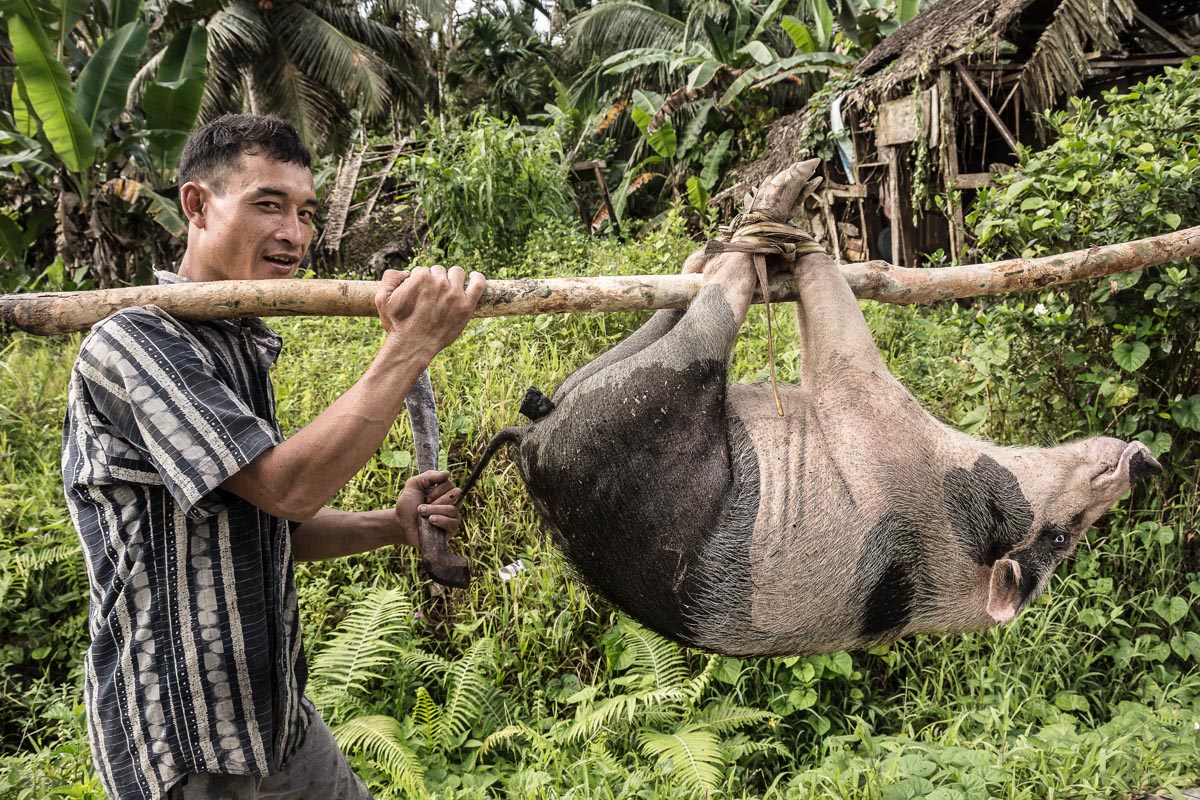
A mentawai man carries a pig in Madobag village. Pig farming is traditionally the main form of animal husbandry, in contrast to the Muslim majority of the population for whom pork is not allowed.

Coastal development

Life in the forest contrasts starkly with plans by the district government to establish a special economic zone on the south coast. Key to this project is the Mentawai Bay Resort, a 2,639-hectare (6,521-acre) coastal development, for which Java-based firm PT Putra Mahakarya Sentosa was awarded a contract. According to the company’s plans, the resort will stretch across about 10 kilometers (6.2 miles) of beachfront and extend up to 6 kilometers (3.7 miles) inland, into what is currently a traditional farming area full of multi-cropped agroforestry gardens among the forest. The area that will be swallowed up by the project also includes a freshwater lake on which people rely for fishing, particularly during the stormy rainy season when rough seas make it dangerous for fishing boats.

Mentawai shaman, Siberut Island, Indonesia rainforest
A man in Durogot hamlet prepares a dugout canoe. He says it takes him two weeks to make a dugout canoe which is made from a single tree. They are a popular source of transport through the forest, especially for taking produce like cocoa, banana, cloves and sago to coastal markets.

The first phase of construction will focus on a 300-hectare (741-acre) airport, an adjacent harbor and yacht marina, hotels, and a theme park. In all, five beachfront hotels, villas and condominium towers will take up 900 hectares (2,224 acres). A golf course, zoo, eco-theme park, hospital, college, and industrial center are also planned. A spiritual area and cultural village are included in recognition of Siberut’s unique cultural heritage.

When it comes to recognition of land rights, however, the developers are lagging behind, says Lubis of the YCMM. “There is compensation given, but only for coconut palms. Whereas land is not compensated.” Lubis says the compensation varies depending on the number or coconut palms lost, and is paid out on an annual basis for five years. Local farmers are still holding out for a comprehensive compensation package that recognizes other assets such as fruit trees, and for now construction remains deadlocked.

Mentawai shaman, Siberut Island, Indonesia rainforest
A mentawai man in Dorogot hamlet eats a sago grub, a traditional source of protein. Siberut Island, part of the Mentawai archipelago in western Indonesia, is recognized as a U.N. Biosphere Reserve due to its outstanding cultural and ecological value.

Biomass electricity

In addition to these large, state-backed initiatives, projects at the local level are already having an impact. In March 2017, work commenced on a biomass power plant, developed by Jakarta-based PT Charta Putra Indonesia (CPI). According to its project portfolio, the company has plans to generate power from tourist trash in Bali and establish a biomass plant in Jambi, on the Sumatra mainland. The Mentawai Distributed Power project is the company’s flagship, a $12.4 million project financed by international donors including the U.S. Agency for International Development (USAID), via the Indonesian government-administered Millennium Challenge Account (MCA).

In a 2018 presentation, founding director Jaya Wahono described biomass energy as a way to make use of the 20 million hectares [49 million acres] of degraded and marginalized lands in Indonesia. By harvesting just two to three bamboo poles per month, he said, households can meet their energy needs.

Mentawai shaman, Siberut Island, Indonesia rainforest
A Mentawai woman bathes her baby in a traditional Uma clan house in Dorogot hamlet. Siberut Island, part of the Mentawai archipelago in western Indonesia, is recognized as a U.N. Biosphere Reserve due to its outstanding cultural and ecological value.

In the villages of Rogdog and Madobag, electricity meters freshly installed on the porch of each house remain a mystery to many people. In particular, people are unclear how the new electricity they have been receiving for the past year will be paid for.

“I don’t have an agreement with the company yet. They just gave me a hundred bamboo saplings to plant and 100,000 rupiah [$7] as payment for planting them,” says clan leader Aman Patdoini in Rogdog.

Mentawai shaman, Siberut Island, Indonesia rainforest
A boy jumps from a new road bridge constructed across the river outside Muara town. The bridge is part of the Trans-Mentawai highway project which plans to run the length of the island and beyond to other islands in the archipelago.

Wahono anticipates that after five years of growth, each seedling will yield 100 poles, equal to around 200 to 300 tons of bamboo feedstock per household. If that proves correct, the 200 households in Rogdog village would produce up to 60,000 tons of bamboo feedstock in five years, more than enough to cover the 2,555 tons required annually to fuel the plant at seven tons per day.

Mentawai shaman, Siberut Island, Indonesia rainforest
Toikot, a traditional Mentawai shaman or ‘Sekerei’ at home in Dorogot hamlet.

These estimates may be optimistic: instead of the monocrop plantation depicted in the company’s marketing materials, seedlings planted in one garden visited by Mongabay were interspersed among other crops, as is customary on the island. Several farmers also said that because they keep pigs they had given their seedlings to neighbors and helped plant them.

But most hope the sale of bamboo will be enough to cover their electricity bill. “It’s undecided whether they’ll have to pay for electricity,” says Gervasius Tasiriottoi of Rogdog village, who is in charge of keeping population records for the local government. “Maybe they can give harvested bamboo in exchange,” he speculates.

Mentawai shaman, Siberut Island, Indonesia rainforest
Toikot (right) is a traditional shaman healer here speaking to his Grandson inside his traditional Uma house. Siberut Island, part of the Mentawai archipelago in western Indonesia, is recognized as a U.N. Biosphere Reserve due to its outstanding cultural and ecological value.

“For now, while staff training takes place, the generator is being run on gasoline. It will be switched to wood in a few months’ time,” says Tasiriottoi. The bamboo harvest is still several years away, though. “In the meantime the company are offering 300 rupiah per kilo [less than a cent per pound] for wood,” says Tasiriottoi. At the entrance to the 300-kilowatt power plant is a pile of logs gathered locally.

“There is plenty of wood, so for now they’re not cutting trees,” Tasiriottoi says. However not all agree, and there’s widespread concern about the impact the project could have on the remaining forest in the area. “There will be a four-year wait until the first bamboo harvest, so I worry the jungle will be destroyed because there is not enough wood. Wild pigs and monkeys will be affected,” says Aman Patdoini.

“Electricity is good, but if the company plant in my garden there will be problems,” says Aman Derik Ogo. “This is our land. Even for me I’m old already. If they grow bamboo everywhere, where can a person find their livelihood? No trees anymore, no medicine, no food. Water all gone. No more firewood. Nothing, because everything used in the biomass plant. No trees anymore so Mentawai people will die.”

Mentawai shaman, Siberut Island, Indonesia rainforest
Kornelius lights a paraffin lamp in the traditional Uma clan house in Dorogot hamlet, an isolated community in Siberut’s swamp forest. Electricity has yet to reach Dorogot, but is already being rolled out in neighbouring villages Rogdog and Madobag as part of a Biomass generation scheme.

An island at the crossroads

The Mentawai are a tight-knit tribe proud of their cultural heritage. Their forest-dependent customary beliefs and livelihood traditions have proven resilient over the ages, allowing them to live off the land without depleting it. Now, development projects are attracting a mixed reception from the Mentawai. While some benefits like electricity and transportation are broadly welcomed, concerns and suspicions about the negative impacts of development are widespread, and opposition is growing to projects that threaten the forest and cultivated gardens.

Mentawai shaman, Siberut Island, Indonesia rainforest
Toikot is a traditional shaman healer with his animals inside his traditional Uma house. Siberut Island, part of the Mentawai archipelago in western Indonesia, is recognized as a U.N. Biosphere Reserve due to its outstanding cultural and ecological value.

Back in Dorogot, life remains much as it has been for generations. To the untrained eye the multi-crop forest garden, where natural forest has grown around cultivated trees, could easily be mistaken for dense jungle. As the sun sinks in the sky and the pigs amble back in search of sago feed, Toikot leaps to his feet with a start. “Can you hear that eagle?” he exclaims. “It’s after my chicks.” The ambitious development plans about to take shape nearby seem distant for now, but for how much longer?

Mentawai shaman, Siberut Island, Indonesia rainforest
Toikot, a traditional Mentwai ‘sekerei’ shaman, looks over to his pig stye to check on his pigs which are feedling on sago logs.


Citation:

Meyers, K., Pio, D., Rachmania, S., Hernandez, A. (2006) 25 Years of Siberut Biosphere Reserve: Saving Siberut and Its Unique Culture and Natural Heritage. UNESCO, Jakarta, Indonesia.

Published on Mongabay.com 
Cambodia: indigenous protests repel dam builders – so far

Koh Kong province in Southwest Cambodia contains some of the most intact forests in Southeast Asia and is home to a plethora of rare species. The forests are under attack from multiple pressures bringing forest dwelling people into conflict with those exploiting the natural resources.

Since the 1980s Cambodia has lost 84% of its primary forests, and the remote Cardamom mountains are the country’s last great natural treasure, writes Rod Harbinson. Just the place for grandiose dam projects? ‘No way!” say indigenous people and young eco-activists.

“Many forests are destroyed in Cambodia – Areng is the last of our great forest areas”, says Sothea Khmer a women’s activist from Phnom Penh, explaining why she is here at the road blockade protest camp:

“We want to stop the Chinese company here. We don’t want them to bring their machinery here to cut the trees, build a dam or dig mines in the Areng valley. The commitment from youth and monks joining us is that they have to stop the company. So they will dedicate their lives here.”

Her words highlight the dramatic decline of Cambodia’s forests which just ten years ago covered large swathes of the country. With some of the highest logging rates in the world it is estimated that since 1990, Cambodia lost 84% of its primary forests [UN FAO].

Now the struggle to save the untold natural riches of these ancient forests has closed in on this patch in the Cardamom mountains, still home to Asian elephants, clouded leopards and the most important breeding site of only 250 wild Siamese crocodiles found globally. Home in all to 31 endangered species.

The Areng dam is ‘a criminal enterprise’

Here the last stand is being played out by activists and local indigenous Chong people. A protest camp hurriedly set up in March [2014] to stop Chinese dam builders entering the Areng Valley to start construction, has since been successful at repelling the dam-builders on several occasions.

As the tropical rain thunders down on the tarpaulin Meng Kheang Seang explains he has come from Phnom Penh to share his experiences. He supports local resistance by people being thrown off their land to make way for Government development schemes.

His friend Phoung shows photos of villagers in Kratie who have had their houses burned to the ground for refusing to move.

Alejandro Gonjalez Davidson asks to “add a little word to your description” when I ask about the Government’s role in the dam: “it is a criminal enterprise, they have assassinated people and they are able to put people in jail and threaten people.”

He explains how senior government officials often leading regional cartels, have systematically plundered the rich natural resources of the country with impunity.

A reluctant leader emerges

Quitting his job 18 months ago to dedicate himself to the campaign, Anglo-Spanish Alex speaks fluent Khmer having been living in the country for 11 years.

He has become the figurehead of a rapidly growing movement, which is attracting youth groups, activists and monks. It is a role he is wary of and he bemoans his bearded face gracing the new banners.

At the same time he cannot deny that the viral popularity of his Facebook videos, has been useful at spreading the message among Cambodia’s youth.

They have even attracting funds from the many Cambodians overseas that fled the regime and along with at least half the population, deeply want to see the end of Prime Minister Hun Sen’s 29 year rule.

We don’t need any compensation because we are staying here on the lands of our ancestors. Our children will never forgive us if we move.

The opposition party has been boycotting the parliament at what it sees as the unfair rigging of the elections in July 2013. This caused huge protests that were finally crushed by a bloody military crackdown which killed striking garment workers.

Still Alex claims the situation has improved as in the past the authorities would have been much quicker to reach for the gun and these days are prepared to negotiate – up to a point.

Fearful of deportation and wanting to play down his leadership role, Alex decides not to join the activists at the blockade now bracing themselves for the arrival of a platoon of soldiers to be stationed near the protest camp to support Sinohydro, the Chinese state-owned dam building company.

No environmental impact assessment has ever been published

The 1,640 mainly indigenous people living in the valley were due to be moved to a nearby relocation site called Veal Thom.

This has recently been rejected due to an outcry by conservation organisations keen to protect the elephant migration route that it would have severed. As yet no alternative has been put forward leaving villagers uncertain about their future.

Dam construction plans show it would include a pipeline, power station, accommodation for 1,200 workers and access roads. These would all add to the affected forest area, making the overall footprint of the dam site far greater than the proposed 20,000 hectare reservoir.

Forest observers are worried. The announcement to clear the neighbouring Tatai dam reservoir site, led to a feverish stampede of hunting and logging as outsiders flocked for rich pickings and inevitably the exploitation spilled into neighbouring forest areas.

Building of the almost complete Tatai dam has been carried out in secrecy at a high security Chinese compound off limits to most Cambodians and foreigners. Rumours circulating of poor working conditions at the site have proven difficult to verify.

Ame Trandem, Cambodia country director of NGO International Rivers, says details of the project under the new management remain obscure. “The project’s Environmental Impact Assessment has not been released to the public, so has never been up for public scrutiny.”

She adds that Sinohydro is notoriously difficult to contact and requests by the author to interview them were met with silence.

Huge cost, huge impact, for little electrical output

The Areng dam would be the fourth hydropower plant in the Cardamoms to provide energy to several provinces. It would be the first in the Cardamoms to displace people, the others having been constructed in forested areas.

This is all part of plans to increase electricity capacity to meet a national demand forecast to double by 2020.

With over 60 projects worldwide, Sinohydro is China’s biggest dam-building company and is the third company to take on the controversial project. First China Southern Power Grid pulled out citing the fragile environment and more recently China Guodian Corporation departed saying that it was not economically viable.

This economic view is supported by the Japanese International Cooperation Agency. Its report for the Cambodian government concludes that the £200 million price tag will result in a high cost of electricity per unit compared with other dams, for the modest 108 megawatt output it would provide.

It also says the 16 mile long valley to be flooded is large compared to the electricity it would generate. Financing for the project is already guaranteed by the Chinese state Exim bank.

Is it just an excuse to log and grab land?

Comparing the dam with similar projects, activist Sothea says that it is primarily an excuse to exploit the natural resources through logging and mining. She sees eventual dam construction as merely the conclusion of an exploitative process.

Soon it becomes clear that the Minister of Mines and Energy is visiting regional capital Koh Kong to instruct local officials to carry out a series of meetings with the villagers in the valley.

Sothea explains the purpose: “The commune Chief calls meetings to force people to agree with him and to accept the compensation from the Government. He uses his role and brings the words from the top management especially from the Minister of Industry, mines and Energy.”

Camp activists decide to attend the first meeting to support the villagers. Early morning, mist shrouding the forest canopy, a fleet of laden scooters sets out down the waterlogged trail through the jungle to the valley.

Locals have packed the local school of Chum Noeb village. The commune headman speaks first and seeks opinions about the government’s compensation offer of five hectares of land for each family.

‘We will destroy the company’s machinery’

Mrs Hom Khat is the first of many women to speak out and flatly rejects the offer saying, “We don’t need any compensation because we are staying here on the lands of our ancestors. Our children will never forgive us if we move.”

Sothea speaks out reminding the audience that the project has not been officially approved and that the Government and company have recently stated that it will only go ahead after feasibility studies and fresh Environmental and Social Impact Assessments have been done.

She highlights that under these circumstances talk of compensation is premature and inappropriate.

The government official sent to oversee proceedings intervenes to say that this meeting is only for villagers to speak and that no more members of the youth group may do so and in future they must report to police. The youth group react angrily with passionate speeches about their freedom of speech, strongly rejecting the official’s demand.

Kum Chae, the commune Chief of neighbouring valley commune Prolay, is feared locally for his past role as a Khmer Rouge official. Locals say he has been circulating photos of Alex and a fellow activist in the community in an attempt to discredit them.

But residents of the valley are growing wise to the official line and are increasingly joining the growing movement of resistance. Boek Sowan of the Chong tribe in the Areng valley remains defiant: “If the company try to build a dam in the valley we will destroy their machinery.”

Published in The Ecologist.

  • DSC 0069, Rod Harbinson
  • DSC6566, Rod Harbinson
  • DSC6517e, Rod Harbinson
  • DSC5263s, Rod Harbinson
  • DSC6592, Rod Harbinson
  • DSC6580, Rod Harbinson
  • DSC6627, Rod Harbinson
  • DSC6642, Rod Harbinson
  • DSC6682, Rod Harbinson
  • DSC6660, Rod Harbinson
  • DSC6703, Rod Harbinson
  • DSC6713, Rod Harbinson
  • DSC6742, Rod Harbinson
  • DSC6746, Rod Harbinson
  • DSC6773, Rod Harbinson
  • DSC6778, Rod Harbinson
  • DSC6962, Rod Harbinson
  • DSC7008, Rod Harbinson
  • DSC 0623e, Rod Harbinson
  • DSC 0108 017, Rod Harbinson
  • DSC 0691e, Rod Harbinson
  • DSC 0763e, Rod Harbinson
  • DSC 0865, Rod Harbinson
  • DSC 0776e, Rod Harbinson
  • DSC 0843, Rod Harbinson
  • DSC 0871, Rod Harbinson
  • DSC 0935e, Rod Harbinson
  • DSC 0943e, Rod Harbinson
  • DSC 1762e, Rod Harbinson
  • DSC 1977eflat, Rod Harbinson
  • DSC 2023, Rod Harbinson
  • DSC 2573, Rod Harbinson
  • DSC 2605, Rod Harbinson
  • DSC 2649, Rod Harbinson
  • Rod Harbinson 05, Rod Harbinson
  • DSC 2614, Rod Harbinson
  • DSC 2735, Rod Harbinson
  • DSC 2786, Rod Harbinson
  • Rod Harbinson10, Rod Harbinson

Farewell old Shanghai

The central Shanghai district of Laoximen popular with tourists for its antique market and traditional stores, is being demolished to make way for modern development.

Demolition amidst the market stalls Last days of the 'Shikumen' community End of days for an 'Art Deco' neigbourhood

A stone’s throw from Laoximen in the trendy Shanghai neighbourhood of Xintiandi, a humble shikumen building has been preserved as a museum commemorating the first national assembly of the Chinese Communist Party in July 1921. A humble wooden table surrounded by stools in the cramped room where the meeting took place is these days a closely guarded national treasure highlighting the humble origins of the Chinese Communist Party, less than a century ago.

Years later, in May 1949, the Communists entered the city and the opposing Nationalists under Chiang Kai Shek fled to Taiwan. Dynamic, sometimes tumultuous change is nothing new to Shanghai. In 1533, during the Ming dynasty, a wall was built around the growing city to protect residents from attack by Japanese pirates. The eight-metre high structure, demolished back in 1912 had ten gates into the city. The West gate (in Chinese called ‘Laoximen’) is now a central district, the city having since expanded far beyond its former limits.

In the early 1920s, competing colonial powers built showcase banking buildings and hotels on the riverside ‘Bund’ promenade. Meanwhile Laoximen followed central Shanghai in building ornate blocks of tenements. Sweeping away the old wooden houses these new buildings for the booming middle classes were a fusion of traditional Chinese styles and architectural features introduced by the colonists, distinctive narrow streets and courtyards which became known as the ‘shikumen’ style, literally translated as ‘Stone Gate’.

Shikumen would become Shanghai’s dominant style of residential architecture. Porcelain kitchen sinks were typically located in the narrow alleys outside the houses. Ornate stone features such as door lintels, roof gables, and carved wooden doors and windows increasingly adorned the brick buildings. Later, as styles evolved, buildings displayed art-deco features. Despite the increasing assault of modern development on its historical buildings, Shanghai still claims more art deco architecture than virtually any other city in the world. However, holding on to the styles and themes of the past is a battle that some traditionalists are finding it increasingly hard to fight.

Under the Arches

A group of three locals sit under the arched entrance to the condemned Jian Road shikumen discussing their bleak housing problems. ‘It’s more than a hundred years since our ancestors came’, says Mr Zhou. ‘I moved here half a century ago,’ says Mrs Zhang.

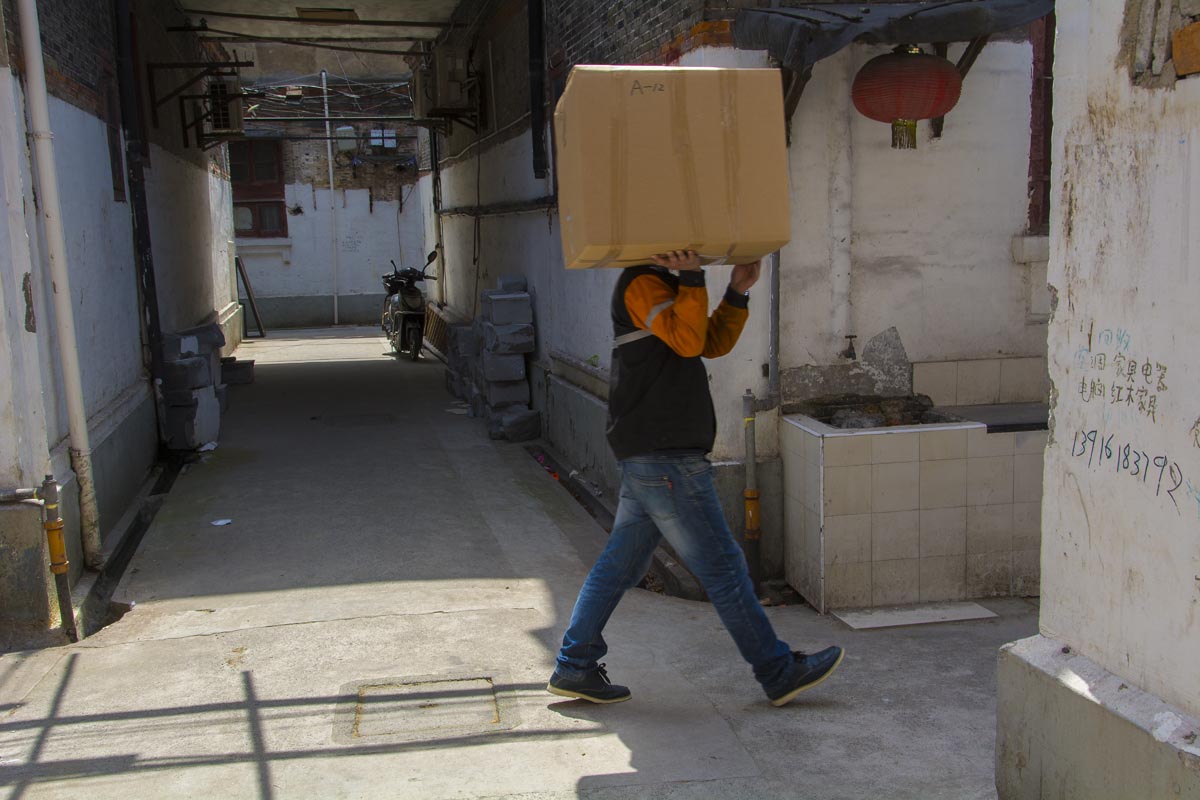
Now in the narrow alleys there is an eerie silence and most homes are boarded up, their doorways covered in paper seals to prevent re-entry. The elderly Mr Zhou confirms that, ‘most of the people have already moved.’ He explains how people were encouraged by the developers to leave: ‘People were asked to move by January and those who fail to do so will not receive a compensation bonus.’ ‘Yeah we will stay here,’ says the group in unison. ‘They could not give the compensation we want so we won’t move,’ they declare defiantly.

The group is angry that the size of their properties by floor area is not being fully considered in their claims. ‘Let me give you an example,’ says Mrs Zhang. ‘Some apartments have two kitchens, but they won’t count this area, nor the balcony or bathroom. Only the living-room and bedrooms are counted.’ With information scarce, the neighbours are in the dark about their rights and compensation procedures. ‘I don’t know who they are,’ says Mrs Zhang when asked who she is negotiating with. ‘There is no government department to talk to about it. It’s the developers who talk to us, who say they are working through the government.’ She says that the developers asked them for trust, but she remains suspicious saying, ‘They don’t have a license and we don’t have a contract with them.’ She suspects that the government just wants to get rid of her at minimum cost: ‘We went to the municipal government office and they turned a blind eye to it. They only care how to sell the lot.’

The group claims the developer offered them less than half of the square metre value for equivalent properties in the area. On top of this, they have to pay 20 per cent to the government for leasehold management: ‘We moved here before the communist liberation,’ says Zhang, ‘then the houses became government property, and thus we became tenants.’

Care Homes

Mr Ye was born in Shanghai and moved to his alley house in the Jian Road shikumen in 1972. He works from home as an electrical repairman. Sitting in his small living room he explains his housing worries as he sorts through a box of old electrical components. ‘We have to move soon. Actually it’s overdue. We need to negotiate,’ he explains. ‘I have a very serious disease, haemophilia, and can only go to the hospital here for medical care. The Royal family in Britain also had that disease. People who have it are like a glass which is very fragile.’ He explains that he has to visit the nearby hospital every day for treatment. Commenting on the eviction process Mr Ye says, ‘They were quite brutal before. They would force you out by cutting the supply of water and electricity. It’s better now, at least they won’t cut you off and demolish forcefully when you’re overdue.’

When asked whether the government will provide alternative housing Ye says, ‘Yes they do but it’s quite far away. Still in Shanghai but in remote areas. We have to negotiate – we need special treatment because of my disease. It’s really expensive to buy a new house around here, the compensation is not enough. We [he and his wife] are both disabled, we can’t walk like normal people. She can walk but not a long way. It’s very convenient to live here but not the new place. I can only get medical care in the centre.

Other hospitals don’t have the medicine for my disease. I told the authorities about our difficulties but they said according to the policy, people will only get houses in suburban districts. People did get houses in the centre in the old days but not now.’ Ye flicks through a thick catalogue of new build high-rise properties available in the outlying suburbs just being constructed. It’s as thick as a telephone directory. All of them are far from the centre. Time is pressing and Ye and his wife feel stressed about the urgency. He’s worried that the lack of attention he is receiving could be life threatening: ‘They have to make sure it’s not worse than we are now. Otherwise it’s risking my life, because I can’t get medical care in time. It will take at least two hours to get to the hospital from there. I’ll already be dead after two hours.’

Market Forces

Cutting through Laoximen is Dongtai street which has been an antiques and flea-market since the 1980s. Featured in many Shanghai guidebooks, it is a popular destination for tourists and locals who come to browse the 150 or so stalls hunting for bargains. The market is itself a product of the city’s immigrants. Many of the items for sale are cast-offs from settled migrants who no longer have need of them. At one stall a huge pile of old suitcases is testament to the stream of workers who continue to arrive. At another, a pile of Mao’s Little Red Book are unwanted reminders of the disastrous cultural revolution which most wish only to forget. Mao-era posters and magazines display fading images of communist realism – a bygone ideological dream, sitting among the crumbling façades of the shikumen buildings with their colonial story.

Many of the traders have moved no further than this market street since they originally arrived. Stallholders describe how the trinkets they had brought from their home-towns proved popular, and soon they were bringing more stock from visits home to the provinces. Among the personal ephemera can be found fixtures and fittings from glazed roof tiles to enamel door numbers, all scavenged from the rolling demolition of the old shikumen neighbourhoods across the city.

Now scavengers are busy in Laoximen itself. In a bitter irony, signs from the neighbouring streets can be found on the stalls, themselves slated to soon be swept away. As the still-ongoing demolition of Laoximen proceeded alley by alley, courtyard by courtyard, the bulldozers and demolition crews grew ever closer to the market itself, still open for business. Most recently, the houses that lined Dongtai street were smashed apart leaving only the street stalls remaining, surrounded by piles of rubble.

One stallholder explained, ‘We are moving very soon. We have meetings in a couple of days. At the end of the month we will know how much we are going to get compensated. I’m not sure where I am going. I am selling everything at a cheap rate.’ In one block, already long since flattened, people hold out in a last solitary building – their semi-demolished home – refusing to relocate, holding out for better compensation. Stallholder Mr Guo says, ‘They asked me to close before the end of March, but I protested. I need compensation you know – it’s normal. It’s reasonable if you stop my life source. The government sells the land for billions of money. We need our life.’

An indigenous woman who has been selling ethnic textiles for 30 years says she has no idea where she will move her stall to and she asks for suggestions. Mr Guo says he looked into another market option but the rents were high in comparison. Most stallholders say they will not be moving on, but instead will be closing their stalls for the last time the day the market ends. As a result many have reduced prices to clear their stock. ‘Now it’s a clearance sale, I can’t take everything home, my home is full of antiques already,’ says Mr Guo, and he explains that now he plans to travel the world. It presents a big life change: ‘I was born here and have been here all my life.’ A neighbouring stallholder says, ‘I’ve been here about 20 years. The street has finished its historical mission.’ For many inhabitants of ‘old’ Shanghai, that same sentiment applies to the city as a whole.

Commissioned by Geographical Magazine

  • DSC4003, Rod Harbinson
  • DSC4017 1, Rod Harbinson
  • DSC4021 1, Rod Harbinson
  • DSC4674 1, Rod Harbinson
  • DSC4116 1, Rod Harbinson
  • DSC4117, Rod Harbinson
  • DSC4120, Rod Harbinson
  • DSC4078 1, Rod Harbinson
  • DSC4139 1, Rod Harbinson
  • DSC4099, Rod Harbinson
  • DSC4167 1, Rod Harbinson
  • DSC4196 1, Rod Harbinson
  • DSC4334 1, Rod Harbinson
  • DSC4369 1, Rod Harbinson
  • DSC4357, Rod Harbinson
  • DSC4377, Rod Harbinson
  • DSC4380 1, Rod Harbinson
  • DSC4396 1, Rod Harbinson
  • DSC4406, Rod Harbinson
  • DSC4442 1, Rod Harbinson
  • DSC4445 1, Rod Harbinson
  • DSC4462, Rod Harbinson
  • DSC4491 1, Rod Harbinson
  • DSC4499, Rod Harbinson
  • DSC4508 2, Rod Harbinson
  • DSC4500 2, Rod Harbinson
  • DSC4516 2, Rod Harbinson
  • DSC4531 1, Rod Harbinson
  • DSC4535, Rod Harbinson
  • DSC4538, Rod Harbinson
  • DSC4541 1, Rod Harbinson
  • DSC4564 1, Rod Harbinson
  • DSC4604, Rod Harbinson
  • DSC4705, Rod Harbinson
  • DSC4699 1, Rod Harbinson
  • DSC4548 1, Rod Harbinson
  • DSC4743 1, Rod Harbinson
  • DSC4716 1, Rod Harbinson
  • DSC4745 1, Rod Harbinson
  • DSC4779 1, Rod Harbinson
  • DSC4771 1, Rod Harbinson
  • DSC4805, Rod Harbinson
error: Content is protected !!