Cambodia: indigenous protests repel dam builders – so far

Koh Kong province in Southwest Cambodia contains some of the most intact forests in Southeast Asia and is home to a plethora of rare species. The forests are under attack from multiple pressures bringing forest dwelling people into conflict with those exploiting the natural resources.

Since the 1980s Cambodia has lost 84% of its primary forests, and the remote Cardamom mountains are the country’s last great natural treasure, writes Rod Harbinson. Just the place for grandiose dam projects? ‘No way!” say indigenous people and young eco-activists.

“Many forests are destroyed in Cambodia – Areng is the last of our great forest areas”, says Sothea Khmer a women’s activist from Phnom Penh, explaining why she is here at the road blockade protest camp:

“We want to stop the Chinese company here. We don’t want them to bring their machinery here to cut the trees, build a dam or dig mines in the Areng valley. The commitment from youth and monks joining us is that they have to stop the company. So they will dedicate their lives here.”

Her words highlight the dramatic decline of Cambodia’s forests which just ten years ago covered large swathes of the country. With some of the highest logging rates in the world it is estimated that since 1990, Cambodia lost 84% of its primary forests [UN FAO].

Now the struggle to save the untold natural riches of these ancient forests has closed in on this patch in the Cardamom mountains, still home to Asian elephants, clouded leopards and the most important breeding site of only 250 wild Siamese crocodiles found globally. Home in all to 31 endangered species.

The Areng dam is ‘a criminal enterprise’

Here the last stand is being played out by activists and local indigenous Chong people. A protest camp hurriedly set up in March [2014] to stop Chinese dam builders entering the Areng Valley to start construction, has since been successful at repelling the dam-builders on several occasions.

As the tropical rain thunders down on the tarpaulin Meng Kheang Seang explains he has come from Phnom Penh to share his experiences. He supports local resistance by people being thrown off their land to make way for Government development schemes.

His friend Phoung shows photos of villagers in Kratie who have had their houses burned to the ground for refusing to move.

Alejandro Gonjalez Davidson asks to “add a little word to your description” when I ask about the Government’s role in the dam: “it is a criminal enterprise, they have assassinated people and they are able to put people in jail and threaten people.”

He explains how senior government officials often leading regional cartels, have systematically plundered the rich natural resources of the country with impunity.

A reluctant leader emerges

Quitting his job 18 months ago to dedicate himself to the campaign, Anglo-Spanish Alex speaks fluent Khmer having been living in the country for 11 years.

He has become the figurehead of a rapidly growing movement, which is attracting youth groups, activists and monks. It is a role he is wary of and he bemoans his bearded face gracing the new banners.

At the same time he cannot deny that the viral popularity of his Facebook videos, has been useful at spreading the message among Cambodia’s youth.

They have even attracting funds from the many Cambodians overseas that fled the regime and along with at least half the population, deeply want to see the end of Prime Minister Hun Sen’s 29 year rule.

We don’t need any compensation because we are staying here on the lands of our ancestors. Our children will never forgive us if we move.

The opposition party has been boycotting the parliament at what it sees as the unfair rigging of the elections in July 2013. This caused huge protests that were finally crushed by a bloody military crackdown which killed striking garment workers.

Still Alex claims the situation has improved as in the past the authorities would have been much quicker to reach for the gun and these days are prepared to negotiate – up to a point.

Fearful of deportation and wanting to play down his leadership role, Alex decides not to join the activists at the blockade now bracing themselves for the arrival of a platoon of soldiers to be stationed near the protest camp to support Sinohydro, the Chinese state-owned dam building company.

No environmental impact assessment has ever been published

The 1,640 mainly indigenous people living in the valley were due to be moved to a nearby relocation site called Veal Thom.

This has recently been rejected due to an outcry by conservation organisations keen to protect the elephant migration route that it would have severed. As yet no alternative has been put forward leaving villagers uncertain about their future.

Dam construction plans show it would include a pipeline, power station, accommodation for 1,200 workers and access roads. These would all add to the affected forest area, making the overall footprint of the dam site far greater than the proposed 20,000 hectare reservoir.

Forest observers are worried. The announcement to clear the neighbouring Tatai dam reservoir site, led to a feverish stampede of hunting and logging as outsiders flocked for rich pickings and inevitably the exploitation spilled into neighbouring forest areas.

Building of the almost complete Tatai dam has been carried out in secrecy at a high security Chinese compound off limits to most Cambodians and foreigners. Rumours circulating of poor working conditions at the site have proven difficult to verify.

Ame Trandem, Cambodia country director of NGO International Rivers, says details of the project under the new management remain obscure. “The project’s Environmental Impact Assessment has not been released to the public, so has never been up for public scrutiny.”

She adds that Sinohydro is notoriously difficult to contact and requests by the author to interview them were met with silence.

Huge cost, huge impact, for little electrical output

The Areng dam would be the fourth hydropower plant in the Cardamoms to provide energy to several provinces. It would be the first in the Cardamoms to displace people, the others having been constructed in forested areas.

This is all part of plans to increase electricity capacity to meet a national demand forecast to double by 2020.

With over 60 projects worldwide, Sinohydro is China’s biggest dam-building company and is the third company to take on the controversial project. First China Southern Power Grid pulled out citing the fragile environment and more recently China Guodian Corporation departed saying that it was not economically viable.

This economic view is supported by the Japanese International Cooperation Agency. Its report for the Cambodian government concludes that the £200 million price tag will result in a high cost of electricity per unit compared with other dams, for the modest 108 megawatt output it would provide.

It also says the 16 mile long valley to be flooded is large compared to the electricity it would generate. Financing for the project is already guaranteed by the Chinese state Exim bank.

Is it just an excuse to log and grab land?

Comparing the dam with similar projects, activist Sothea says that it is primarily an excuse to exploit the natural resources through logging and mining. She sees eventual dam construction as merely the conclusion of an exploitative process.

Soon it becomes clear that the Minister of Mines and Energy is visiting regional capital Koh Kong to instruct local officials to carry out a series of meetings with the villagers in the valley.

Sothea explains the purpose: “The commune Chief calls meetings to force people to agree with him and to accept the compensation from the Government. He uses his role and brings the words from the top management especially from the Minister of Industry, mines and Energy.”

Camp activists decide to attend the first meeting to support the villagers. Early morning, mist shrouding the forest canopy, a fleet of laden scooters sets out down the waterlogged trail through the jungle to the valley.

Locals have packed the local school of Chum Noeb village. The commune headman speaks first and seeks opinions about the government’s compensation offer of five hectares of land for each family.

‘We will destroy the company’s machinery’

Mrs Hom Khat is the first of many women to speak out and flatly rejects the offer saying, “We don’t need any compensation because we are staying here on the lands of our ancestors. Our children will never forgive us if we move.”

Sothea speaks out reminding the audience that the project has not been officially approved and that the Government and company have recently stated that it will only go ahead after feasibility studies and fresh Environmental and Social Impact Assessments have been done.

She highlights that under these circumstances talk of compensation is premature and inappropriate.

The government official sent to oversee proceedings intervenes to say that this meeting is only for villagers to speak and that no more members of the youth group may do so and in future they must report to police. The youth group react angrily with passionate speeches about their freedom of speech, strongly rejecting the official’s demand.

Kum Chae, the commune Chief of neighbouring valley commune Prolay, is feared locally for his past role as a Khmer Rouge official. Locals say he has been circulating photos of Alex and a fellow activist in the community in an attempt to discredit them.

But residents of the valley are growing wise to the official line and are increasingly joining the growing movement of resistance. Boek Sowan of the Chong tribe in the Areng valley remains defiant: “If the company try to build a dam in the valley we will destroy their machinery.”

Published in The Ecologist.

  • DSC 0069, Rod Harbinson
  • DSC6566, Rod Harbinson
  • DSC6517e, Rod Harbinson
  • DSC5263s, Rod Harbinson
  • DSC6592, Rod Harbinson
  • DSC6580, Rod Harbinson
  • DSC6627, Rod Harbinson
  • DSC6642, Rod Harbinson
  • DSC6682, Rod Harbinson
  • DSC6660, Rod Harbinson
  • DSC6703, Rod Harbinson
  • DSC6713, Rod Harbinson
  • DSC6742, Rod Harbinson
  • DSC6746, Rod Harbinson
  • DSC6773, Rod Harbinson
  • DSC6778, Rod Harbinson
  • DSC6962, Rod Harbinson
  • DSC7008, Rod Harbinson
  • DSC 0623e, Rod Harbinson
  • DSC 0108 017, Rod Harbinson
  • DSC 0691e, Rod Harbinson
  • DSC 0763e, Rod Harbinson
  • DSC 0865, Rod Harbinson
  • DSC 0776e, Rod Harbinson
  • DSC 0843, Rod Harbinson
  • DSC 0871, Rod Harbinson
  • DSC 0935e, Rod Harbinson
  • DSC 0943e, Rod Harbinson
  • DSC 1762e, Rod Harbinson
  • DSC 1977eflat, Rod Harbinson
  • DSC 2023, Rod Harbinson
  • DSC 2573, Rod Harbinson
  • DSC 2605, Rod Harbinson
  • DSC 2649, Rod Harbinson
  • Rod Harbinson 05, Rod Harbinson
  • DSC 2614, Rod Harbinson
  • DSC 2735, Rod Harbinson
  • DSC 2786, Rod Harbinson
  • Rod Harbinson10, Rod Harbinson

Farewell old Shanghai

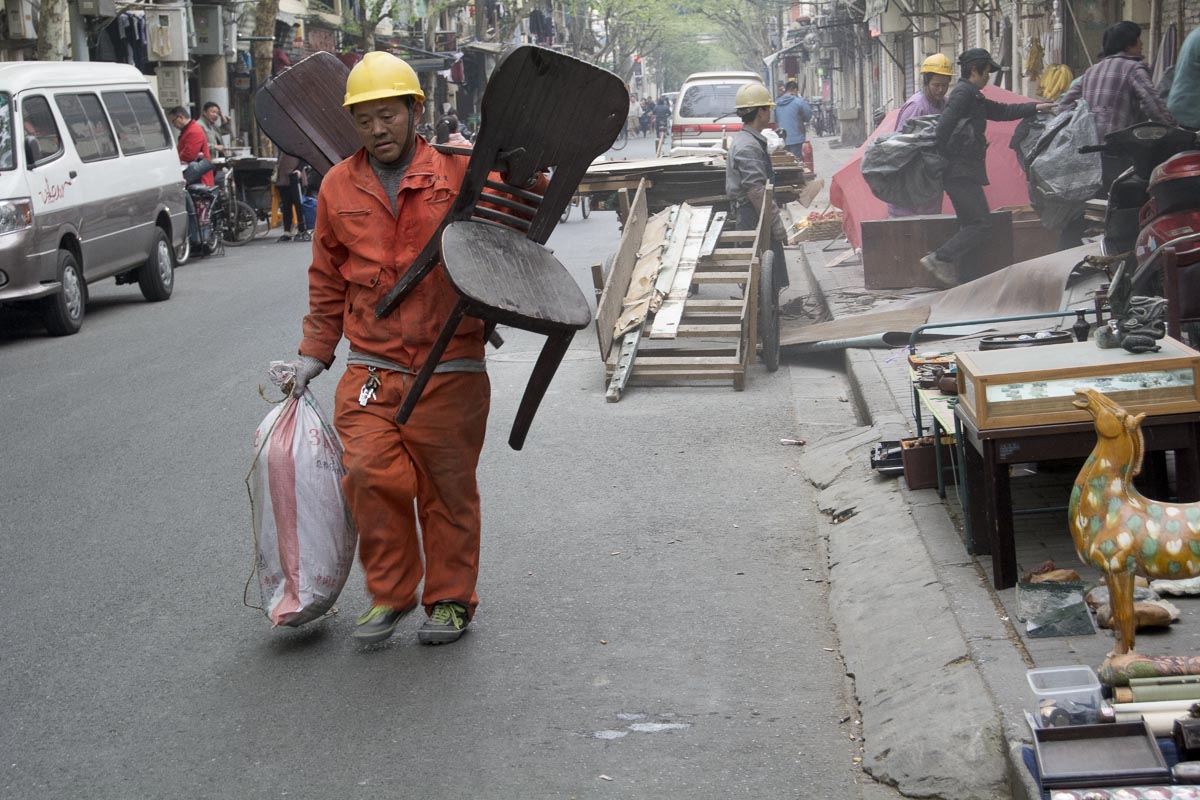
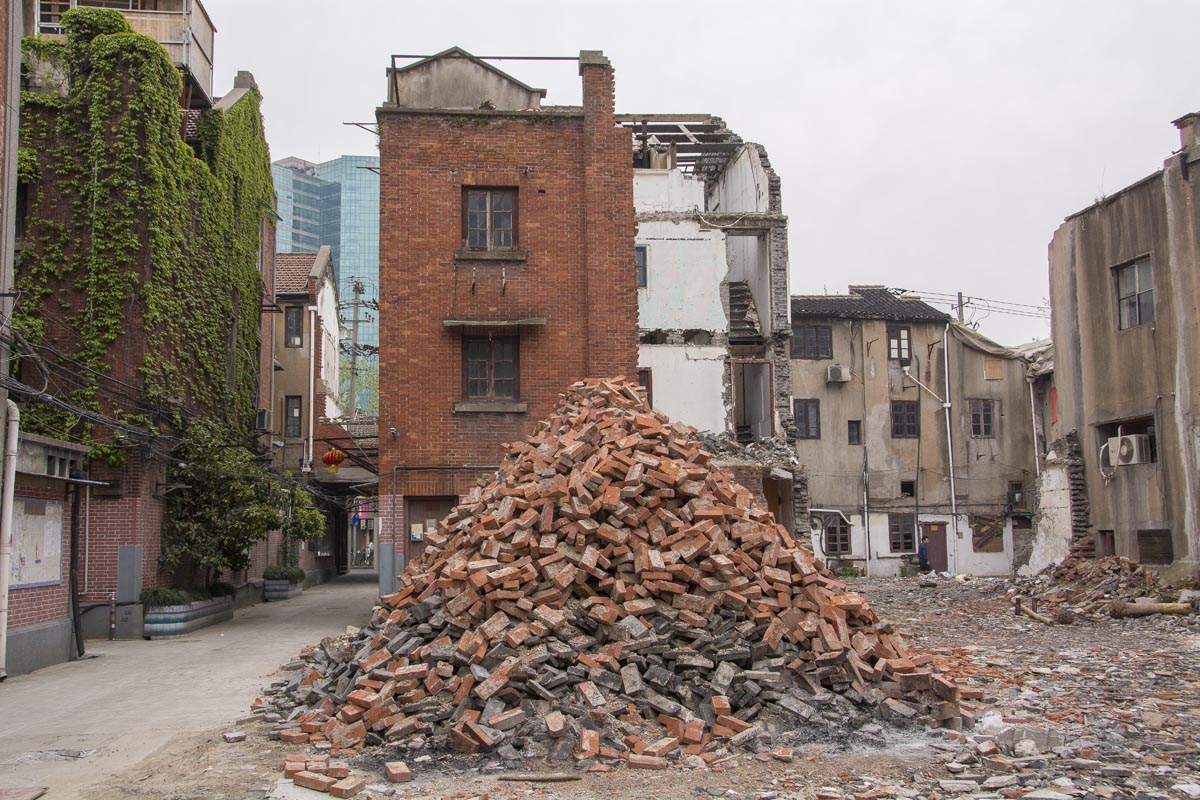
The central Shanghai district of Laoximen popular with tourists for its antique market and traditional stores, is being demolished to make way for modern development.

Demolition amidst the market stalls Last days of the 'Shikumen' community End of days for an 'Art Deco' neigbourhood

A stone’s throw from Laoximen in the trendy Shanghai neighbourhood of Xintiandi, a humble shikumen building has been preserved as a museum commemorating the first national assembly of the Chinese Communist Party in July 1921. A humble wooden table surrounded by stools in the cramped room where the meeting took place is these days a closely guarded national treasure highlighting the humble origins of the Chinese Communist Party, less than a century ago.

Years later, in May 1949, the Communists entered the city and the opposing Nationalists under Chiang Kai Shek fled to Taiwan. Dynamic, sometimes tumultuous change is nothing new to Shanghai. In 1533, during the Ming dynasty, a wall was built around the growing city to protect residents from attack by Japanese pirates. The eight-metre high structure, demolished back in 1912 had ten gates into the city. The West gate (in Chinese called ‘Laoximen’) is now a central district, the city having since expanded far beyond its former limits.

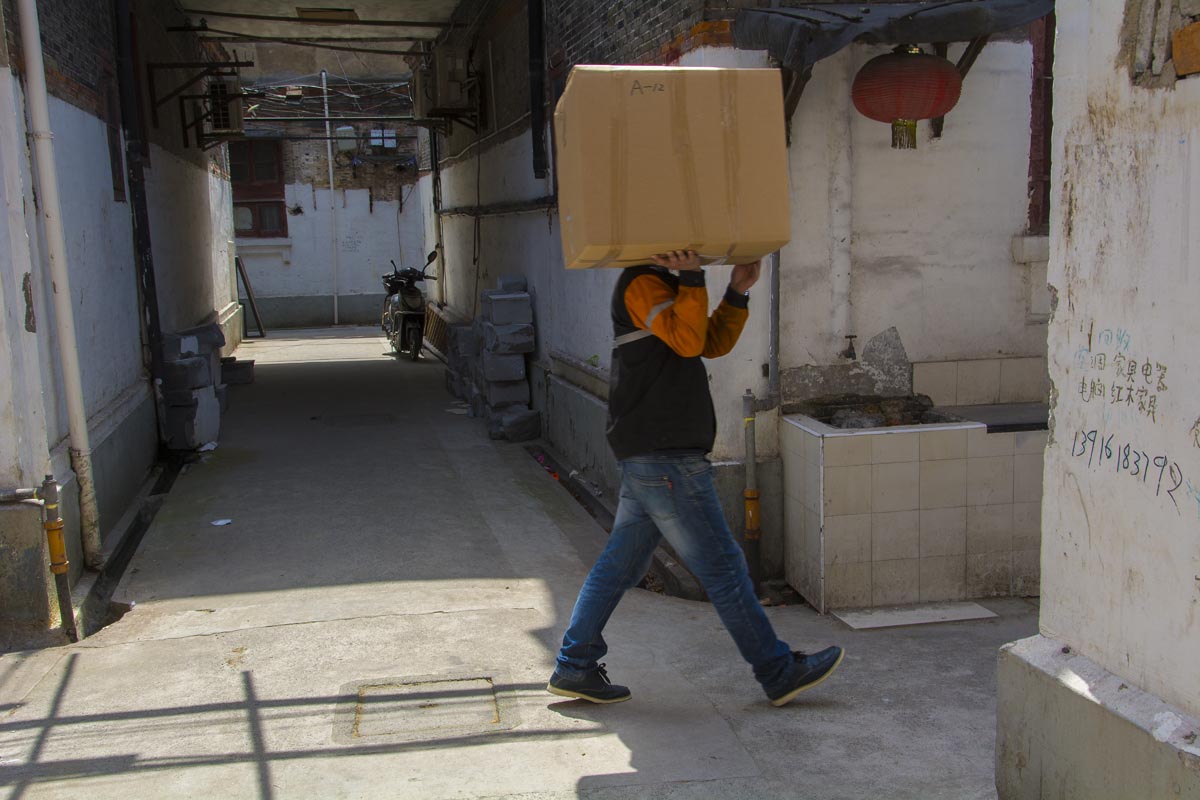
In the early 1920s, competing colonial powers built showcase banking buildings and hotels on the riverside ‘Bund’ promenade. Meanwhile Laoximen followed central Shanghai in building ornate blocks of tenements. Sweeping away the old wooden houses these new buildings for the booming middle classes were a fusion of traditional Chinese styles and architectural features introduced by the colonists, distinctive narrow streets and courtyards which became known as the ‘shikumen’ style, literally translated as ‘Stone Gate’.

Shikumen would become Shanghai’s dominant style of residential architecture. Porcelain kitchen sinks were typically located in the narrow alleys outside the houses. Ornate stone features such as door lintels, roof gables, and carved wooden doors and windows increasingly adorned the brick buildings. Later, as styles evolved, buildings displayed art-deco features. Despite the increasing assault of modern development on its historical buildings, Shanghai still claims more art deco architecture than virtually any other city in the world. However, holding on to the styles and themes of the past is a battle that some traditionalists are finding it increasingly hard to fight.

Under the Arches

A group of three locals sit under the arched entrance to the condemned Jian Road shikumen discussing their bleak housing problems. ‘It’s more than a hundred years since our ancestors came’, says Mr Zhou. ‘I moved here half a century ago,’ says Mrs Zhang.

Now in the narrow alleys there is an eerie silence and most homes are boarded up, their doorways covered in paper seals to prevent re-entry. The elderly Mr Zhou confirms that, ‘most of the people have already moved.’ He explains how people were encouraged by the developers to leave: ‘People were asked to move by January and those who fail to do so will not receive a compensation bonus.’ ‘Yeah we will stay here,’ says the group in unison. ‘They could not give the compensation we want so we won’t move,’ they declare defiantly.

The group is angry that the size of their properties by floor area is not being fully considered in their claims. ‘Let me give you an example,’ says Mrs Zhang. ‘Some apartments have two kitchens, but they won’t count this area, nor the balcony or bathroom. Only the living-room and bedrooms are counted.’ With information scarce, the neighbours are in the dark about their rights and compensation procedures. ‘I don’t know who they are,’ says Mrs Zhang when asked who she is negotiating with. ‘There is no government department to talk to about it. It’s the developers who talk to us, who say they are working through the government.’ She says that the developers asked them for trust, but she remains suspicious saying, ‘They don’t have a license and we don’t have a contract with them.’ She suspects that the government just wants to get rid of her at minimum cost: ‘We went to the municipal government office and they turned a blind eye to it. They only care how to sell the lot.’

The group claims the developer offered them less than half of the square metre value for equivalent properties in the area. On top of this, they have to pay 20 per cent to the government for leasehold management: ‘We moved here before the communist liberation,’ says Zhang, ‘then the houses became government property, and thus we became tenants.’

Care Homes

Mr Ye was born in Shanghai and moved to his alley house in the Jian Road shikumen in 1972. He works from home as an electrical repairman. Sitting in his small living room he explains his housing worries as he sorts through a box of old electrical components. ‘We have to move soon. Actually it’s overdue. We need to negotiate,’ he explains. ‘I have a very serious disease, haemophilia, and can only go to the hospital here for medical care. The Royal family in Britain also had that disease. People who have it are like a glass which is very fragile.’ He explains that he has to visit the nearby hospital every day for treatment. Commenting on the eviction process Mr Ye says, ‘They were quite brutal before. They would force you out by cutting the supply of water and electricity. It’s better now, at least they won’t cut you off and demolish forcefully when you’re overdue.’

When asked whether the government will provide alternative housing Ye says, ‘Yes they do but it’s quite far away. Still in Shanghai but in remote areas. We have to negotiate – we need special treatment because of my disease. It’s really expensive to buy a new house around here, the compensation is not enough. We [he and his wife] are both disabled, we can’t walk like normal people. She can walk but not a long way. It’s very convenient to live here but not the new place. I can only get medical care in the centre.

Other hospitals don’t have the medicine for my disease. I told the authorities about our difficulties but they said according to the policy, people will only get houses in suburban districts. People did get houses in the centre in the old days but not now.’ Ye flicks through a thick catalogue of new build high-rise properties available in the outlying suburbs just being constructed. It’s as thick as a telephone directory. All of them are far from the centre. Time is pressing and Ye and his wife feel stressed about the urgency. He’s worried that the lack of attention he is receiving could be life threatening: ‘They have to make sure it’s not worse than we are now. Otherwise it’s risking my life, because I can’t get medical care in time. It will take at least two hours to get to the hospital from there. I’ll already be dead after two hours.’

Market Forces

Cutting through Laoximen is Dongtai street which has been an antiques and flea-market since the 1980s. Featured in many Shanghai guidebooks, it is a popular destination for tourists and locals who come to browse the 150 or so stalls hunting for bargains. The market is itself a product of the city’s immigrants. Many of the items for sale are cast-offs from settled migrants who no longer have need of them. At one stall a huge pile of old suitcases is testament to the stream of workers who continue to arrive. At another, a pile of Mao’s Little Red Book are unwanted reminders of the disastrous cultural revolution which most wish only to forget. Mao-era posters and magazines display fading images of communist realism – a bygone ideological dream, sitting among the crumbling façades of the shikumen buildings with their colonial story.

Many of the traders have moved no further than this market street since they originally arrived. Stallholders describe how the trinkets they had brought from their home-towns proved popular, and soon they were bringing more stock from visits home to the provinces. Among the personal ephemera can be found fixtures and fittings from glazed roof tiles to enamel door numbers, all scavenged from the rolling demolition of the old shikumen neighbourhoods across the city.

Now scavengers are busy in Laoximen itself. In a bitter irony, signs from the neighbouring streets can be found on the stalls, themselves slated to soon be swept away. As the still-ongoing demolition of Laoximen proceeded alley by alley, courtyard by courtyard, the bulldozers and demolition crews grew ever closer to the market itself, still open for business. Most recently, the houses that lined Dongtai street were smashed apart leaving only the street stalls remaining, surrounded by piles of rubble.

One stallholder explained, ‘We are moving very soon. We have meetings in a couple of days. At the end of the month we will know how much we are going to get compensated. I’m not sure where I am going. I am selling everything at a cheap rate.’ In one block, already long since flattened, people hold out in a last solitary building – their semi-demolished home – refusing to relocate, holding out for better compensation. Stallholder Mr Guo says, ‘They asked me to close before the end of March, but I protested. I need compensation you know – it’s normal. It’s reasonable if you stop my life source. The government sells the land for billions of money. We need our life.’

An indigenous woman who has been selling ethnic textiles for 30 years says she has no idea where she will move her stall to and she asks for suggestions. Mr Guo says he looked into another market option but the rents were high in comparison. Most stallholders say they will not be moving on, but instead will be closing their stalls for the last time the day the market ends. As a result many have reduced prices to clear their stock. ‘Now it’s a clearance sale, I can’t take everything home, my home is full of antiques already,’ says Mr Guo, and he explains that now he plans to travel the world. It presents a big life change: ‘I was born here and have been here all my life.’ A neighbouring stallholder says, ‘I’ve been here about 20 years. The street has finished its historical mission.’ For many inhabitants of ‘old’ Shanghai, that same sentiment applies to the city as a whole.

Commissioned by Geographical Magazine

  • DSC4003, Rod Harbinson
  • DSC4017 1, Rod Harbinson
  • DSC4021 1, Rod Harbinson
  • DSC4674 1, Rod Harbinson
  • DSC4116 1, Rod Harbinson
  • DSC4117, Rod Harbinson
  • DSC4120, Rod Harbinson
  • DSC4078 1, Rod Harbinson
  • DSC4139 1, Rod Harbinson
  • DSC4099, Rod Harbinson
  • DSC4167 1, Rod Harbinson
  • DSC4196 1, Rod Harbinson
  • DSC4334 1, Rod Harbinson
  • DSC4369 1, Rod Harbinson
  • DSC4357, Rod Harbinson
  • DSC4377, Rod Harbinson
  • DSC4380 1, Rod Harbinson
  • DSC4396 1, Rod Harbinson
  • DSC4406, Rod Harbinson
  • DSC4442 1, Rod Harbinson
  • DSC4445 1, Rod Harbinson
  • DSC4462, Rod Harbinson
  • DSC4491 1, Rod Harbinson
  • DSC4499, Rod Harbinson
  • DSC4508 2, Rod Harbinson
  • DSC4500 2, Rod Harbinson
  • DSC4516 2, Rod Harbinson
  • DSC4531 1, Rod Harbinson
  • DSC4535, Rod Harbinson
  • DSC4538, Rod Harbinson
  • DSC4541 1, Rod Harbinson
  • DSC4564 1, Rod Harbinson
  • DSC4604, Rod Harbinson
  • DSC4705, Rod Harbinson
  • DSC4699 1, Rod Harbinson
  • DSC4548 1, Rod Harbinson
  • DSC4743 1, Rod Harbinson
  • DSC4716 1, Rod Harbinson
  • DSC4745 1, Rod Harbinson
  • DSC4779 1, Rod Harbinson
  • DSC4771 1, Rod Harbinson
  • DSC4805, Rod Harbinson
error: Content is protected !!