Sambor-dam17


But now they are being violently evicted as the park is being sold off piecemeal to developers for logging, plantations, casinos and hotels. Now local communities are defending themselves and their land.
The sign at the entrance of Botum Sakor, one of Cambodia’s largest National Parks reads: “The natural resources belong to the State and they are not for sale to private owners.”
The reality unfolding behind the sign in the park is anything but, with most of it sold off to business. Farmers and fisherfolk have had their houses burned down and now resist regular threats from security guards hired by the park’s new corporate owners.
It is a burning example of a struggle for land that has engulfed the country, reaching crisis proportions.
War widow Mrs Saen Saheng was at home with her grandchildren when 30 security guards entered her village of Prek Smach brandishing axes, sling-shots and electric cattle prods. Resident here since a young woman she explains:
“The company didn’t come and say anything, they just came and broke down my home. They brought security guards and took it apart, two days ago. They were even carrying axes and hammers with them. They brought the axes really close to my face.”
Sixteen families were at the time taking refuge in the village temple having fled their neighbouring village a month previous when security guards torched their homes.
When the villagers rallied the guards backed off, but then called in dumper trucks which blocked the village road with heaps of rock and earth.
In 1998 the Cambodian Government began to sell off parts of Botum Sakor’s 171,250 Ha which has been a National Park established under royal decree since 1993. These Economic Land Concessions (ELCs) awarded to the highest bidder, have placed huge swathes amounting to 70% of the park, in the hands of private developers for agribusiness (such as palm oil and rubber plantations), tourism, infrastructure and quarrying.
A luxury Chinese tourism project, the Dara Sakor Seashore Resort and a Chinese port construction, are at the heart of this controversy. The villagers explained that they hold the district Governor Mr Khem Chandy, responsible for organising the ongoing harassment. They accuse him of being on the payroll of the resort’s developers the Tianjin Union Development Group (UDG).
Soon villagers set up their own road blockade, felling trees and carrying rocks to block access to a new road constructed at the orders of the Governor. One villager explained that the road led to the Governor’s private pier where he took the boat to his island house. By blocking it they were also hitting his income from parking and docking fees.
The Governor arrived in a shiny four wheel drive vehicle and unloaded a large chainsaw with the help of local police, presumably to cut away the trees blocking the road.
When asked for his response to claims of villagers, that he had ordered the security guards to raze their houses, he said: “The minister of Environment, as the chair of that committee, is in charge of solving the problem, not me.” Mr Chandy refused to answer further questions.
Economic Land Concessions have placed huge swathes, amounting to 70% of the park, in the hands of private developers for agribusiness such as palm oil and rubber plantations, tourism and infrastructure.
Mrs Chum Ohn explained why her desperate story has led her to defend the barricades: “I had a house but four years ago the company came with axes and destroyed it. They gave me a new house 10 km away but now that is broken too. I received no land and no well for water.”
With life at the relocation site of Ta Noun commune proving impossible she decided to return, only to begin another story of suffering: “I received no money, nothing, so now we just returned to the coast for fishing. I built a hut close to the sea but the company they came to destroy my hut too.”
Over a thousand families have been sent inland to till sandy soil on land carved out of the tropical forests of the National Park, which is still home to a plethora of flora and fauna.
In 2009 a four year study of the park’s animal life by Frontier Cambodia confirmed it as a global biodiversity hotspot containing 49 rare mammal species including Asian elephant, leopard, and gibbon. Their inventory also included 69 reptile, 147 butterfly and 196 bird species.
A four lane 68 km highway built by UDG developers – a Chinese property conglomerate – slices through the middle of the Park to access a 36,000 ha coastal ELC awarded by the government in 2009. Along the highway, swathes of the forest have been bulldozed for building materials.
A big draw-card here is gambling, on a high-stakes level that will dwarf similar developments in the region. The centrepiece of the US$3.8 billion luxury coastal resort will be a casino, accompanied by golf courses and even its own airport. The continued ban on gambling in China lends temptation to potential investors, who may also be lured by the claim on its website, that its concession covers 20% of Cambodia’s entire coastline.
The website says it “will become a new tropical beach paradise for the rich Chinese.” It claims too that the project will house the permanent convention centre of ASEAN. About which the ASEAN Secretariat claims to know nothing, a spokesperson stating: “ASEAN National Tourism Organisations are not involved in this undertaking.”
The website says it will also include a “tropical farm, fishing village and ancient town.” The UDG declined to confirm whether these would be based on the existing establishments involving local people. Or they would be new purpose-built resort attractions. With local farms and fishing villages being currently being razed to the ground the evidence suggests the latter.
A deafening quarry blast shakes the ground beneath our feet as a nearby hillside collapses in clouds of dust at the port site. Rocks are soon being loaded and transported away for construction of shipping wharfs, dams, reservoirs and artificial islands, now transforming the area out of all recognition.
Mrs Sok Lim is toiling with a hoe to clear the course grasses that cover her small plot. One of dozens of houses strung along the dusty road comprising Phny Meas village, one of three relocation sites in the area.
The silvery soil underneath is nearly pure sand and, she complains, “nothing much will grow here.” The new houses and land plots lining this dusty roadside have been hurriedly constructed by UDG on land carved out of the thick forest which still towers in the background.
Coming from the coast Mrs Lim is not used to farming like this and misses her once sufficient life of fishing and rice farming. Like her neighbours too she is bitter that the grandiose promises of compensation made by the company have completely failed to materialise. She says of the US$8,000 per hectare she was promised for her farmland, she has received nothing – a common complaint in the area.
Her neighbour Mr Vuthy says he has almost given up farming as he doesn’t find it worthwhile under these conditions: “I planted some fruit trees but they are not growing, there is not enough”, he tells me. “It’s because of the soil – it has no nutrients as it sits on a hill. So when we plant we don’t get much out of it.”
To make ends meet he has taken to foraging what he can in the forest: “It is not just me going into the forest, as all the villagers are poor. Those who came to the relocation site have nothing, so we have to enter the forest and look for things such as rattan fruit.”
He is acutely aware of the impact he and his neighbours are having on the forest but feels helpless: “We’re all poor. We’ll all go to look for products each year, so there is nothing left the year after. Hence the decline.”
In response to increasing conflicts arising from the handing out of ELCs, in 2012 Prime Minister Hun Sen placed a stop on new ELCs and encouraged enforcement of a ‘leopard skin’ policy.
It decrees that villagers may stay in their homes even where they are in the middle of an ELC, ‘like the spots of a leopard’. Since its implementation critics have cited many examples questioning its workability in practice. Nevertheless it does afford villagers, at least on paper, the right to remain in their homes.
The problem in Botum Sakor is all too common in Cambodia, and all the signs are that vested interests have ignored laws with impunity. Implementation of the 2001 Land Law which limits the size of ELCs to 10,000 Ha also seems to be failing, with most of the companies’ concessions here far exceeding this limit. Hun Sen’s halt on ELCs was short-lived with group ADHOC claiming 33 ELCs handed out since the ban.
In February with the blockade having held firm for over a month, the Governor delivered an eviction order to the remaining forty seven families. The day the community counter-sued a woman, one of the forty seven, said: “We are not afraid of dying anymore, we just need to continue the fight.”
In one concession awarded to The Ly Yong Phat Group, the company of government Senator and business tycoon Ly Yong Phat, mile after mile of the tropical forest is on fire, reportedly to clear land for a Tapioca plantation.
The Senator dubbed locally as ‘The King of Koh Kong’ became infamous for his role at the heart of the blood sugar controversy involving child labour on his plantations. Global Forest Watch satellite data highlights the fire locations and shows that the huge area in the heart of the park has been cleared since 2012 and is spreading rapidly.
Ly Yung Phat wants villagers at the coastal community of Preach Sat out of his ELC but they refuse to budge. In February he even made a personal journey to the village calling a meeting in the village temple saying: “I got the land concession from the government and it is national park land.”
Most community members were unconvinced as he continued to try and convince them, “I have developed the area and made a new road, so that local people will sell land to me. If I need local people to cooperate why do I have to be the enemy?”
One couple at the meeting who had farmed there over 40 years complained that while a few people connected to the commune chief had received compensation, most had not.
As the boat navigates the twists and turns further into the interior of the park, the channel narrows and eventually we reach a small boat landing. From here it is a 3km walk to the village of Phum Thmey. Along the way we meet a charcoal burner and notice that much of the forest has been cleared, some to make way for Acacia plantations.
The villagers explain how they came here over ten years ago to farm rice. Some are ethnic Cham Muslims originally from Eastern Cambodia. All were dismayed at the ongoing struggle they have had to hang on to farmland they make claim over since a 18,000 Ha ELC was handed out to Chinese Green Rich / Elite Group in 1998 for palm oil and acacia plantations.
Since then this company, said by Greenpeace to be a subsidiary of Asian Pulp and Paper, has been extending its Acacia plantations onto their land, with support from local authorities.
Mr Choey shows me his wad of legal documents and explains how he has been battling to maintain his farmland since 2006, even spending time in jail. He said the government views the settlers as no more than land squatters who have settled in a national park which is off limits.
The settlers view matters differently, as Mrs Saw Phia, an ethnic Cham, explained: “They told us this was the company’s land and that the villagers had stolen their land. To which we replied that it couldn’t be the company’s land as when we got here it had no owner and it was forested.”
Many are aggrieved that after the company paid pitifully low wages to the local community to plant an Acacia tree plantation, they then burnt their houses down.
Mrs Saw Phia said: “Originally 14 Cham families came to live here, but now there are only three families left because some houses were set on fire and their land was taken from them by the company. We didn’t dare do anything … they got a lighter to set fire to the homes and some axes, so no one dared do anything about it.”
The recently released Human Rights Watch, World Report 2015, highlights that land disputes in Cambodia are now running out of control stating:
“The number of people affected by state-involved land conflicts since 2000 passed the half-million mark in March 2014.”
“Many forests are destroyed in Cambodia – Areng is the last of our great forest areas”, says Sothea Khmer a women’s activist from Phnom Penh, explaining why she is here at the road blockade protest camp:
“We want to stop the Chinese company here. We don’t want them to bring their machinery here to cut the trees, build a dam or dig mines in the Areng valley. The commitment from youth and monks joining us is that they have to stop the company. So they will dedicate their lives here.”
Her words highlight the dramatic decline of Cambodia’s forests which just ten years ago covered large swathes of the country. With some of the highest logging rates in the world it is estimated that since 1990, Cambodia lost 84% of its primary forests [UN FAO].
Now the struggle to save the untold natural riches of these ancient forests has closed in on this patch in the Cardamom mountains, still home to Asian elephants, clouded leopards and the most important breeding site of only 250 wild Siamese crocodiles found globally. Home in all to 31 endangered species.
Here the last stand is being played out by activists and local indigenous Chong people. A protest camp hurriedly set up in March [2014] to stop Chinese dam builders entering the Areng Valley to start construction, has since been successful at repelling the dam-builders on several occasions.
As the tropical rain thunders down on the tarpaulin Meng Kheang Seang explains he has come from Phnom Penh to share his experiences. He supports local resistance by people being thrown off their land to make way for Government development schemes.
His friend Phoung shows photos of villagers in Kratie who have had their houses burned to the ground for refusing to move.
Alejandro Gonjalez Davidson asks to “add a little word to your description” when I ask about the Government’s role in the dam: “it is a criminal enterprise, they have assassinated people and they are able to put people in jail and threaten people.”
He explains how senior government officials often leading regional cartels, have systematically plundered the rich natural resources of the country with impunity.
Quitting his job 18 months ago to dedicate himself to the campaign, Anglo-Spanish Alex speaks fluent Khmer having been living in the country for 11 years.
He has become the figurehead of a rapidly growing movement, which is attracting youth groups, activists and monks. It is a role he is wary of and he bemoans his bearded face gracing the new banners.
At the same time he cannot deny that the viral popularity of his Facebook videos, has been useful at spreading the message among Cambodia’s youth.
They have even attracting funds from the many Cambodians overseas that fled the regime and along with at least half the population, deeply want to see the end of Prime Minister Hun Sen’s 29 year rule.
We don’t need any compensation because we are staying here on the lands of our ancestors. Our children will never forgive us if we move.
The opposition party has been boycotting the parliament at what it sees as the unfair rigging of the elections in July 2013. This caused huge protests that were finally crushed by a bloody military crackdown which killed striking garment workers.
Still Alex claims the situation has improved as in the past the authorities would have been much quicker to reach for the gun and these days are prepared to negotiate – up to a point.
Fearful of deportation and wanting to play down his leadership role, Alex decides not to join the activists at the blockade now bracing themselves for the arrival of a platoon of soldiers to be stationed near the protest camp to support Sinohydro, the Chinese state-owned dam building company.
The 1,640 mainly indigenous people living in the valley were due to be moved to a nearby relocation site called Veal Thom.
This has recently been rejected due to an outcry by conservation organisations keen to protect the elephant migration route that it would have severed. As yet no alternative has been put forward leaving villagers uncertain about their future.
Dam construction plans show it would include a pipeline, power station, accommodation for 1,200 workers and access roads. These would all add to the affected forest area, making the overall footprint of the dam site far greater than the proposed 20,000 hectare reservoir.
Forest observers are worried. The announcement to clear the neighbouring Tatai dam reservoir site, led to a feverish stampede of hunting and logging as outsiders flocked for rich pickings and inevitably the exploitation spilled into neighbouring forest areas.
Building of the almost complete Tatai dam has been carried out in secrecy at a high security Chinese compound off limits to most Cambodians and foreigners. Rumours circulating of poor working conditions at the site have proven difficult to verify.
Ame Trandem, Cambodia country director of NGO International Rivers, says details of the project under the new management remain obscure. “The project’s Environmental Impact Assessment has not been released to the public, so has never been up for public scrutiny.”
She adds that Sinohydro is notoriously difficult to contact and requests by the author to interview them were met with silence.
The Areng dam would be the fourth hydropower plant in the Cardamoms to provide energy to several provinces. It would be the first in the Cardamoms to displace people, the others having been constructed in forested areas.
This is all part of plans to increase electricity capacity to meet a national demand forecast to double by 2020.
With over 60 projects worldwide, Sinohydro is China’s biggest dam-building company and is the third company to take on the controversial project. First China Southern Power Grid pulled out citing the fragile environment and more recently China Guodian Corporation departed saying that it was not economically viable.
This economic view is supported by the Japanese International Cooperation Agency. Its report for the Cambodian government concludes that the £200 million price tag will result in a high cost of electricity per unit compared with other dams, for the modest 108 megawatt output it would provide.
It also says the 16 mile long valley to be flooded is large compared to the electricity it would generate. Financing for the project is already guaranteed by the Chinese state Exim bank.
Comparing the dam with similar projects, activist Sothea says that it is primarily an excuse to exploit the natural resources through logging and mining. She sees eventual dam construction as merely the conclusion of an exploitative process.
Soon it becomes clear that the Minister of Mines and Energy is visiting regional capital Koh Kong to instruct local officials to carry out a series of meetings with the villagers in the valley.
Sothea explains the purpose: “The commune Chief calls meetings to force people to agree with him and to accept the compensation from the Government. He uses his role and brings the words from the top management especially from the Minister of Industry, mines and Energy.”
Camp activists decide to attend the first meeting to support the villagers. Early morning, mist shrouding the forest canopy, a fleet of laden scooters sets out down the waterlogged trail through the jungle to the valley.
Locals have packed the local school of Chum Noeb village. The commune headman speaks first and seeks opinions about the government’s compensation offer of five hectares of land for each family.
Mrs Hom Khat is the first of many women to speak out and flatly rejects the offer saying, “We don’t need any compensation because we are staying here on the lands of our ancestors. Our children will never forgive us if we move.”
Sothea speaks out reminding the audience that the project has not been officially approved and that the Government and company have recently stated that it will only go ahead after feasibility studies and fresh Environmental and Social Impact Assessments have been done.
She highlights that under these circumstances talk of compensation is premature and inappropriate.
The government official sent to oversee proceedings intervenes to say that this meeting is only for villagers to speak and that no more members of the youth group may do so and in future they must report to police. The youth group react angrily with passionate speeches about their freedom of speech, strongly rejecting the official’s demand.
Kum Chae, the commune Chief of neighbouring valley commune Prolay, is feared locally for his past role as a Khmer Rouge official. Locals say he has been circulating photos of Alex and a fellow activist in the community in an attempt to discredit them.
But residents of the valley are growing wise to the official line and are increasingly joining the growing movement of resistance. Boek Sowan of the Chong tribe in the Areng valley remains defiant: “If the company try to build a dam in the valley we will destroy their machinery.”
Published in The Ecologist.


Palawan is a large island-province of the Philippines that lies midway between the rest of the archipelago and Borneo. The great beauty and biological value of the island was validated in 1990 when the United Nations Educational, Scientific and Cultural Organization (UNESCO) conferred the status of “Man and Biosphere Reserve” on this tropical paradise. In recent years, however, there has been an onslaught from mining and agribusiness keen to exploit its natural resources.
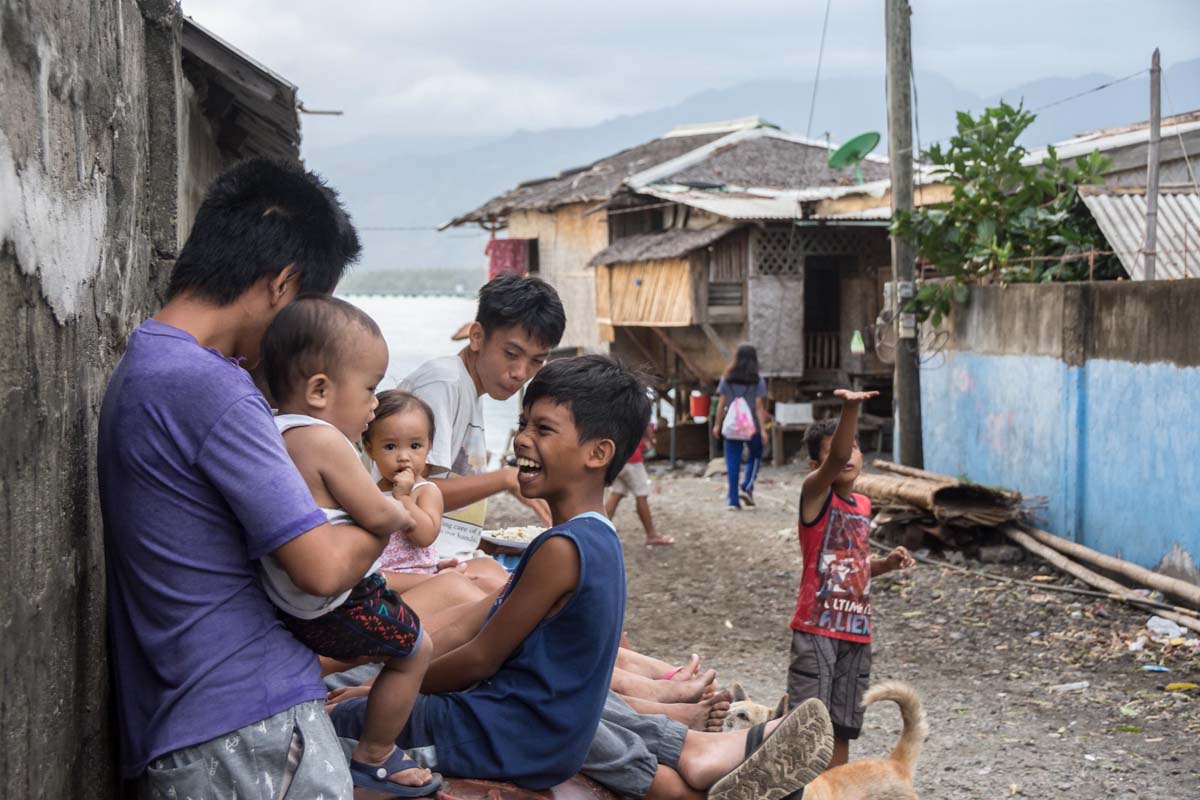
Palawan’s pristine coastline gives way to coconut palms and then lush rolling forested hills speckled with tribal houses. This municipality of Quezon in central Palawan is the domain of the Indigenous Tagbanua people . They say a proportion of their lands have now been appropriated for palm oil cultivation.
In 2002 the Philippine government decided to expand palm oil cultivation in the archipelago to reduce imports and to fulfil the country’s rapidly growing domestic consumption. That same year, the Department of Agriculture calculated that average palm oil production was 54,333 metric tons, with consumption running at 94,400 metric tons. Growing demand was expected to have reached 171,700 tons by 2015.
Today these expansion trends continue and in 2013 The Philippine Palm Oil Development Council Inc. (PPDCI) published an ambitious roadmap for expansion reported the Sunstar newspaper in the Philippines on August 27, 2015. It said the PPDCI “is eyeing another 300,000 hectares to expand oil palm plantation in a bid to make the country self-sufficient to palm oil products…The council targets to achieve, under its palm oil industry roadmap, the expansion in eight years from 2015 to 2023.”
Two major palm oil companies operate in Palawan: Palawan Palm & Vegetable Oil Mills, Incorporated (PPVOMI) and Agumil Philippines, Incorporated (AGPI). PPVOMI is 60 percent Singapore-owned and 40% Filipino, whereas AGPI is 75% Filipino-owned and 25% Malaysian. The parent company of AGPI is Malaysian-registered Agusan Plantations Incorporated. Other smaller companies are also joining in the “golden oil” rush.
AGPI has established a palm oil mill in the Municipality of Brooke’s Point for the processing of plantation harvests. As such, it buys 100 percent of the PPVOMI production.
With 70 percent of processed oil due to be exported to Singapore, China and Malaysia, the original rationale to supply domestic production appears to have been contradicted.
In deals struck with palm oil companies, different communities in central and southern Palawan agreed to lease areas of their farm and forest land in return for a share of the income from the palm oil profits. In other cases, local people leased parcels of land under customary native title to palm oil companies at low rents.
“We wanted to plant palm oil because the conditions were good. The conditions offered by the companies. But until now, it has been six years and we have not received any benefits,” said Graciano Muniz, tribal farmer from Aramaywan community [Baringay], in the municipality of Quezon in central Palawan.
In the seven years since the first leases began, none of the participating cooperatives have reportedly received a single payment, despite four years of harvest since the plants reached production maturity at around three years.
“The landowners were fooled by this company. To the extent that prior to that they have lands to till, they have lands to plant the crops for their living,” said Rodiar Carlio, a member of the Coalition against Land Grabbing (CALG), an NGO galvanizing resistance to the palm oil companies in Aramaywan and neighboring communities. He is negotiating with AGPI for a solution to the dispute.
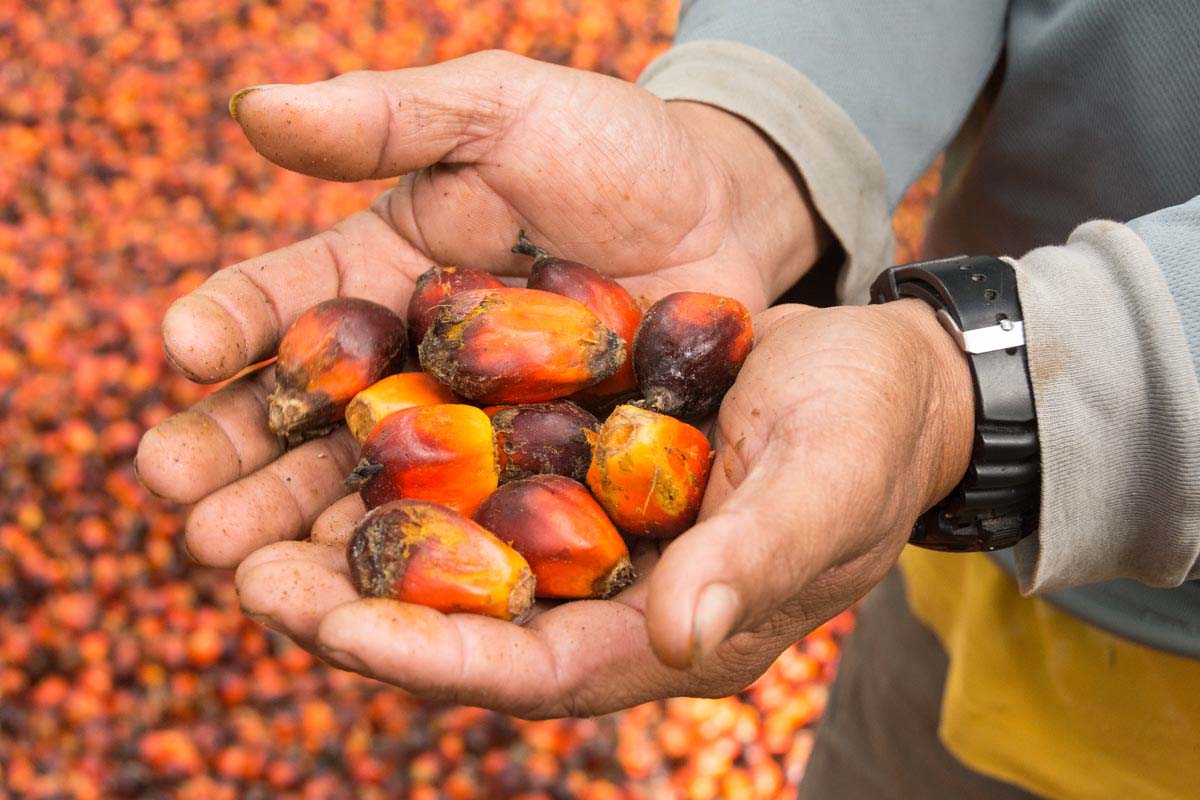
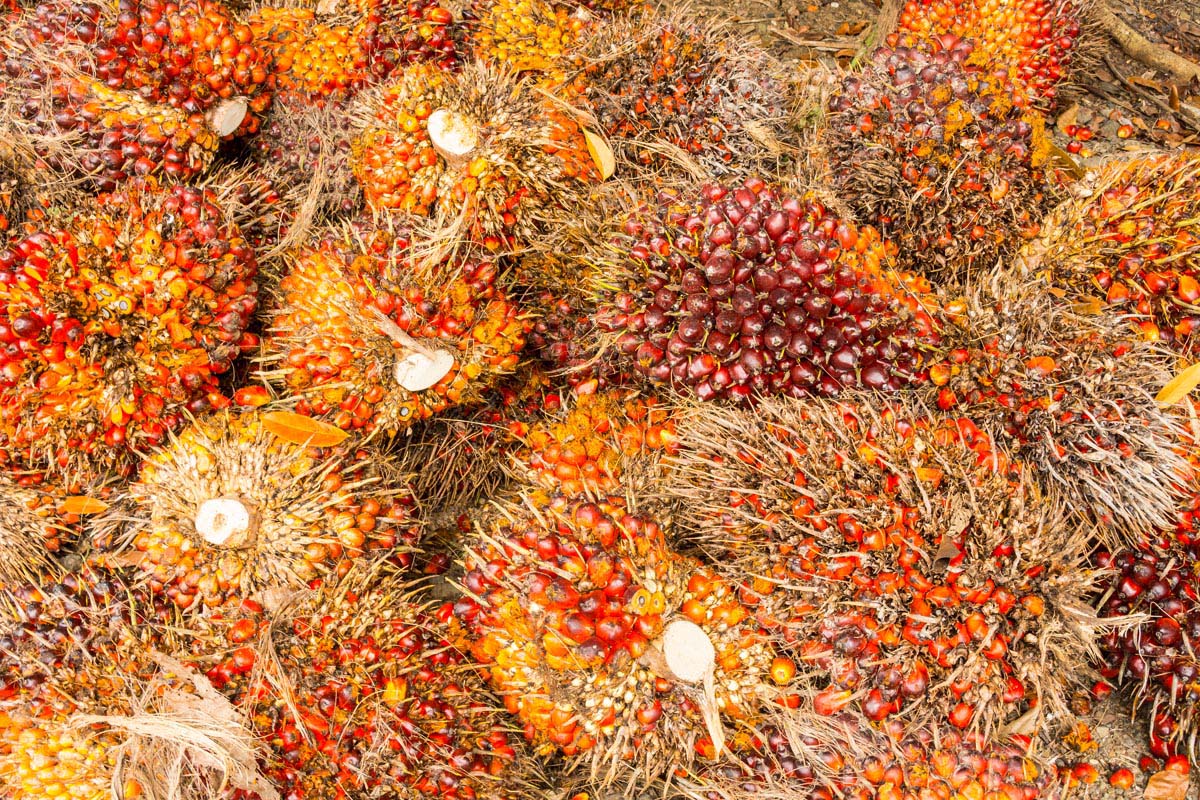
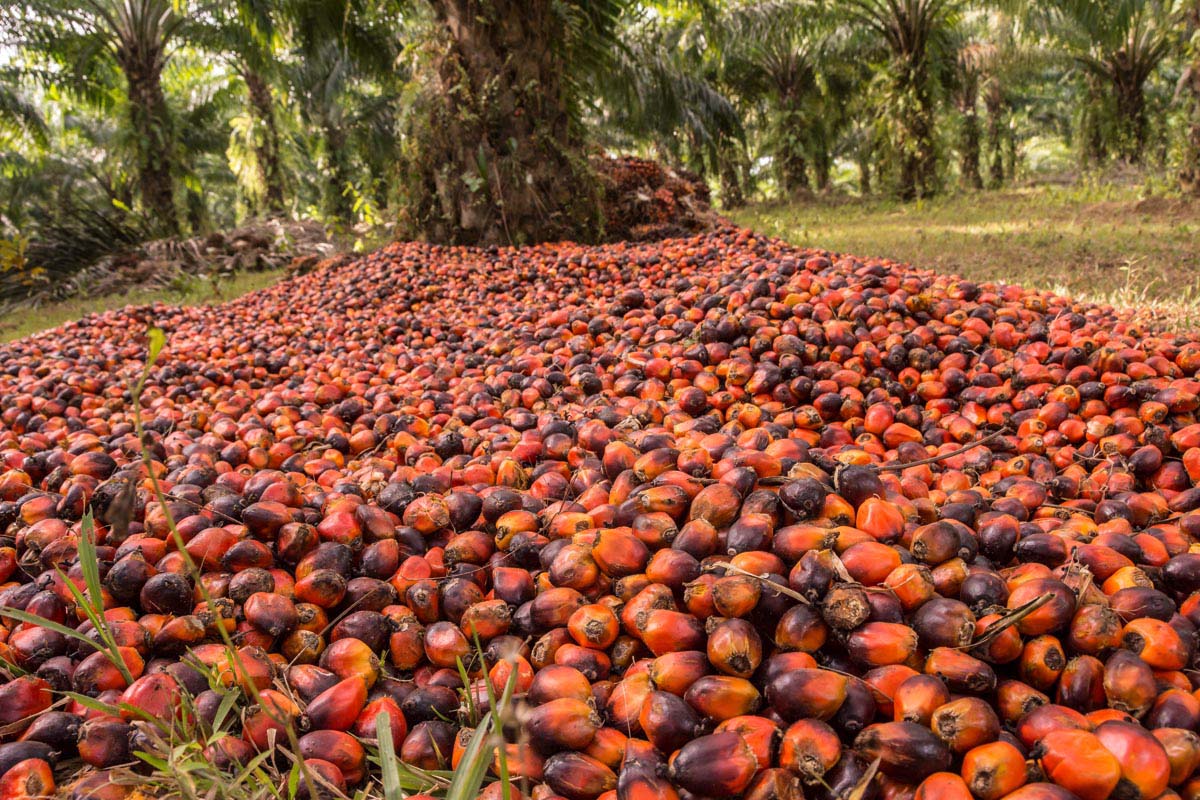
Palm oil has increasingly entered our food supply chain in the past 20 years and is now found in a multitude of consumer items from biscuits to shampoo. Viewed by food companies as a wonder crop, the prolific harvests of palm fruit are rich in saturated oil. However, the crop has courted controversy wherever it has been grown. Huge swathes of the great tropical forests on the island of Borneo have been felled to make space for oil palm plantations. Since then, cultivation has continued to spread throughout Southeast Asia – and even into Africa (where the wild oil palm originates) and South America – to feed an insatiable demand for the golden oil.
When sales teams from AGPI originally came knocking seven years ago, some tribal and farm communities were attracted to the high incomes the company promised relative to their dominant cash crop of coconut palm – which is still widely cultivated. Many signed-over a proportion of their private farmland for palm oil cultivation.
Roberto Bardolassa is one of these farmers. He moved to Palawan in 2007 from Rizal Island to cultivate his wife’s land.
“At that time the company was organizing and looking for landowners to cooperate with their company…so we decided to be their partner,” Bardolassa said.
Bardolassa and his wife leased three hectares to AGPI, but have since regretted it. “I think that what has happened here is indirectly land-grabbing,” he said. “If not why can’t we till our own land?…The rights of the poor people here – especially the farmers in Palawan, are being exploited by that crocodile Agumil.”
Some elderly farmers told Mongabay they found the scheme especially attractive because the company promised to arrange the plantation maintenance labor and provide steady income that would ensure pensions. “The original agreement – based on the conditions of the landowners and the co-op officials—meant there was a good possibility that we could improve our standard of living,” said farmer Graciano Muniz. “However, we have not received those benefits.”
Pasteur Motalib Kemil, tribal leader of the Tagbanua tribe, Aramaywan community [Baringay], in the municipality of Quezon, is Chairman of CALG. He told Mongabay that the 25-year contract was written in English, which the vast majority of farmers did not understand. He explained that officials from the tribal cooperatives often signed up on behalf of participating farmers and the title deeds for the land were handed over to the company for safekeeping. Kemil says he is not alone in suspecting that the company has passed the farmers’ land title deeds to the Land Bank of the Philippines (a government lender) as collateral to secure the loans used to set up the plantations.
“We haven’t received any payment for rental of our farmland – it has all gone to the Land Bank that provided the loan. These farmers provided their land titles as collateral to the Land Bank and it takes 25 years to pay before they receive their share of the profits from the harvest,” Boy Soda, elected representative of the Palawan Tribe from Baringay Salogunin in the Brooks Point municipality told Mongabay.
Land clearance and planting of the young palm oil saplings was then billed to the farmers as a loan incurring 14 percent interest annually. Farmers complain that many of the contractual details were kept hidden.
Rodiar Carlio explained: “to our surprise even the officers of the cooperative had entered into a contract, they called it PTME, the Production Technical Marketing Agreement, and they initiated the management services agreement. But the signing of PTME was concealed before the general assembly…. Even the officers who signed that contract had no total knowledge of what they were signing.”
The farmers had expected that their income would begin once the palm oil trees had matured to harvest stage, around three years. They had not expected to have to pay the setup costs and the onerous rates of interest from the Land Bank, and they claim they were deceived throughout the contractual negotiations.
“We are paying the company for the equity, for the services that they are giving the cooperative,” Carlio said. “In our cooperative alone we owe to the Landbank about 11 million pesos (US$237,000). Right now the interest is almost like the principal [loan] – another 11 million. Then that 11 million plus another 11 million that is 22 million and then that is compounded annually at 14%. In that contract the cooperative is required to pay all the debts for six years from the start of the harvest. But the cooperative, as we analyze, under the management of the company cannot pay its debts to the Landbank.”
Motalib Kemil shares Carlio’s opinion that once all costs are deducted from income accrued from the harvest, the farmers are unlikely to receive anything over the 25 year period, even if the company intended to make payments, which it shows no sign of doing. Many of the farmers fear that the debt mountain they have been duped into accumulating will mean that they will never see their land again. Part of the problem, according to Motalib, is that loan payments are insufficient because the size of the harvest has fallen short of that promised by the company.
In addition, Motalib explained that because it has a monopoly on processing, the company sets the price per kilogram it will pay for the palm oil fruit, which he complains is lower than the global commodity price.
Since AGPI began operations, it has made deals with six municipalities in central and southern Palawan (the target area for oil palm development spans the municipalities of Aborlan, Narra, Quezon, Sofronio Española, Brooke’s Point, Rizal and Bataraza) for rent or purchase of around 6,000 hectares. However, its sales teams are still active on the island trying to meet their 20,000-hectare target. As word spreads about payment failures, fewer tribal people and farmers are inclined to sign leases, according to Motalib. “I think it will be very hard to meet this target because now farmers do not want to sell because they have heard about the bad experiences of other farmers,” he said.
Harvested palm oil fruit is taken to the AGPI processing plant at Brookes Point in central Palawan and from there it is shipped to other islands such as Cebu, and also abroad to China, Malaysia and Singapore. Tribal representatives are disappointed with the lack of support they have received from state institutions for their plight. None seem prepared to help them.
“It would appear that Agumil and other oil palm enterprises have bypassed, with impunity, the Strategic Environment Plan (SEP), the very law which should ensure sustainable development and environmental protection in Palawan,” said Marivic B. Bero, CALG Secretary General. She explained that state institutions including the Palawan Department of Environment and Natural Resources (DENR) and the Committee for Sustainable Development (CSD) are both responsible for failing to properly enforce SEP regulations restricting land clearance.
Mongabay approached Agumil, Land Bank, the governor’s office, DENR and the CSD for their reactions to the criticisms of the cooperatives. No responses were forthcoming.
In 2004, the provincial board of the governor’s office passed Provincial Ordinance No. 739-04 promoting development of the palm oil industry and it is understood by tribal leaders that this remains its position. It was the culmination of a period of promotion by then-Governor Joel Reyes who successfully invited palm oil companies to Palawan. Promotion led to the creation of the Palawan Palm Oil Industry Development Council (PPOIDC), a multi-agency body tasked with promoting the palm oil sector in Palawan and ensuring that developments such as construction of a refinery took place.
Since oil palm plantations have rolled out across the landscape, farmers claim that new previously unknown agronomic problems have surfaced. For instance, the palm trees require high water usage, which can come at the expense of neighboring crops.
“Our discovery, is that palm oil [trees] absorbs a bunch of water compared to other trees, so if your land is planted by palm oil forget it. Only because of the palm oil, you can’t plant any more other crops,” Carlio said. In addition, the oil palms possess very thick and deep root formations that are difficult to remove.
According to Carlio, the plantations use high levels of external inputs like pesticides and herbicides and these too are having knock-on environmental effects.
“Some studies show that the insects that destroy the coconuts in the province emanate from the palm oil. But the company denied that. So we are using pesticides, especially the people who are engaged in coconut planting. So their coconuts are dying because [of] that insect that is destroying the coconut. Prior to the existence of palm oil in the province there was no such thing as that insect that destroys the coconut,” Carlio said.
A 2013 report by ALDAW supports Carlio’s suspicions.
“New pests are spreading from neighbouring oil palm plantations to indigenous cultivated fields and coconuts groves,” the report states. “Such pests include the Red Palm Weevil (Rhynchophorus ferrugineus) and Brontispa longissima. The latter, according to local informants, was not present in the area before the establishment of oil palm plantations.”
Graciano Muniz has made a pragmatic work transition to cultivating seaweed for the Chinese pharmaceutical market. “These days I don’t join in farming palm oil. We earn our living from the sea. Farming in the sea,” he said.
Tribal representatives are aware of the risks they face when speaking out about their predicament. According to a report by ALDAW, key architect of the Palawan palm oil industry and former Governor Joel Reyes is currently a “fugitive abroad and wanted by ICPO (International Criminal Police Organization) – INTERPOL. Joel Reyes, in fact, has been identified as the mandate and organizer of the killing of Gerry Ortega.”
Local radio journalist and environmental campaigner Gerry Ortega, was gunned down in January 2011 in Palawan capital Puerto Princesa, reportedly for his staunch anti-mining campaigning. Agence France Presse reported in March 2011 that Ortega was the latest in a line of at least four campaigners who lost their lives for speaking out against resource exploitation in Palawan.
Bardolassa is adamant that he will continue his fight for justice, despite what happens.
“I am willing to die even – yes – I am not afraid,” Bardolassa said. “What is the meaning of my life if I do not let the world know what I know? The reality of what is happening to our farms.”
In late September, CALG submitted a petition signed by 4,200 farmers and indigenous residents to Palawan Vice-Governor Dennis Socrates, calling for a moratorium of palm oil expansion on the island.
Bishop Pedro Arrigo personally endorsed the petition, saying it “comes directly from the very people who have suffered the environmental and social consequences of oil palm development in our province over the past seven years. It is about time that their grievances will be heard by the Provincial Government and acted upon.”
Published by Mongabay.