Meet those fighting sand-dredging in Cambodia

Sand-dredging is big business, especially in Asia, where demand has sky-rocketed thanks to the booming construction industry.

The sleepy fishing village of Koh Sralao, situated on a small island in a mangrove- lined estuary, is in the frontline of the resistance against rampant sand-dredging.

‘Sweetheart Island is the only place we can fish for crab now. Many islands have been lost to the sand-dredging already,’ said fisher Lim Lon. With its houses on stilts strung out over the water, the isolated village of Koh Sralao in Cambodia’s southwest Koh Kong Province is far from the tranquil backwater that it might appear at first sight. It is at the forefront of a movement to halt the sand-dredging which, since 2007, has blighted this and many other communities along Cambodia’s rivers and coastline.

As our fishing boat sailed upriver through an abandoned dredging site, the mangroves lay fallen and dying where the river bank had collapsed. A farmer complained that his riverside fields had receded 20 metres from erosion since the arrival of the dredgers.

‘Before the dredging, the water was only two metres [deep] or less, and in some places there were sand banks, but now the water is at least five metres and some places eight,’ explained another fisher, Phen Sophany. ‘When the water reaches five to seven metres, there are only a few male crabs. Crabs need shallower waters for breeding.’ Even when the dredgers have moved on, the crabs don’t return.

Studies have demonstrated that if sand extraction is greater than the rate at which it is naturally replaced by sedimentary deposits, then erosion will take place, not just at the dredging site, but upriver and downstream too, largely because the greater river capacity increases the speed of the flow, exacerbating erosion and increasing the potential for flooding.

Despite a seeming abundance of sand, and its low cost relative to other mined commodities, rapidly escalating global demand has led to pressure on supplies, and salt-free river sand is particularly prized for use in construction work.

‘It still impacts us when the dredgers are working upstream, because all the muddy water flows downstream – and crabs can’t live in muddy water,’ explained Sophany.

By 2015, dredging was hitting the community hard. Catches were down, and many families had taken out high-interest loans from loan sharks to stay in business. Others ‘collected water snails in the mangroves, but now there are no snail stocks’. Some quit crab fishing altogether to seek work in the new economic zone factories in Koh Kong city, a two-hour boat ride away.

Asia’s development boom is a key global driver of global sand demand – with Singapore by far the biggest importer. In 2012 academic Pascal Peduzzi estimated that ‘the world’s use of aggregates for concrete can be estimated at 25.9 billion to 29.6 billion tonnes a year – enough to build a wall 27 metres high by 27 metres wide around the equator.’ He estimates that between 47 and 59 billion tonnes of aggregate and sand is mined every year.

Satisfying Singapore’s hunger for sand led neighbours Indonesia and Malaysia to experience dramatic environmental impacts at home – including, in Indonesia’s case, the disappearance of entire islands. One by one, neighbouring countries stopped exporting to Singapore, leaving regional countries such as the Philippines, Vietnam, Burma and Cambodia to replace supplies. In a bid to open up a new supply front, in March a Singaporean company reportedly held talks with the government of Bangladesh to explore a nationwide sand-dredging deal.

Escalating activism

In April 2015, when activists from NGO Mother Nature offered to help stop the sand-dredging works, many in Koh Sralao were only too keen to form a partnership. Together, they went from one sand-dredging barge to the next, demanding that they leave. To their surprise, the sand-miners complied. It was later discovered that, with no licence to dredge in the area, companies feared being exposed.

Mother Nature then started receiving calls about large-scale dredging operations from communities further west on the Andeung Teuk River. When activists arrived, they found more than 60 sand barges owned by the Direct Access sand-mining company.

The people who have benefited from all this, who have pocketed all this dirty money, are at the highest levels of government. ‘More than 100 people protested,’ says activist Sim Samnang, describing the flotilla of fisherfolk and activists who surrounded and boarded the barges. ‘We warned them away from the area, from our river.’ Each barge was carrying 10,000 cubic metres of sand to be transported out to sea and loaded onto giant cargo ships bound for Singapore.

The sand-dredging business is controlled by senior members of Cambodia’s ruling elite, notably Senator Ly Yong Phat, according to a report, ‘Shifting Sand’, by British NGO Global Witness. Ly Yong Phat is well known in Koh Kong Province, where he is known as the ‘King of Koh Kong’ for his widespread business dealings there.

In December 2016, five community fishers, activists (including this author) and a journalist were illegally detained by security guards from the Udum Seima Peanich Industry and Mine Co while visiting its dredging site on the Tatai River. Two of Prime Minister Hun Sen’s daughters, Hun Maly and Hun Mala, are listed as shareholders of the company.

Activists Sim Samnang, Try Sovikea and San Mala were imprisoned as a result of their efforts at the Andeung Teuk. ‘The government arrested us and left us in jail without trial for 10 months and 15 days,’ Sim told me in January from a secret location outside Cambodia, where the three were awaiting the outcome of their court appeal. Sim wasn’t hopeful: ‘The appeal court has summoned us to trial again in Phnom Penh, but we don’t trust them. Usually the Cambodian court is working under government power. It’s not independent, we cannot trust them. That’s why we came out of the country.’

At the appeal hearing their original sentence was upheld, and although they will avoid a further prison spell for now, they remain liable to pay $25,000 compensation to Direct Access, which brought the compensation case.5 Being in no position to pay the large sum, their situation remains precarious.

Sand-smuggling scam

‘The people who have benefited from all this, who have pocketed all this dirty money, [are] at the highest levels of government, and [in] some of the companies – which are more like mafia cartels,’ says Alejandro Gonzalez-Davidson, founding director of Mother Nature Cambodia. He was deported in February 2015, for opposing construction of Cambodia’s proposed Areng dam.

He explains how in October 2016 he uncovered a scandal involving millions of tons of illegally exported sand to Singapore. By investigating sand import and export trade figures available on the UN Commodity Trade Statistics Database, Mother Nature identified a large discrepancy in quantities of sand exported by Cambodia to Singapore. The discrepancy was valued at around $750 million.6 So where had the missing sand gone?‘Hundreds of millions of dollars have been stolen from the Cambodian people,’ says Gonzalez-Davidson.

The Ministry of Mines and Energy have repeatedly dismissed the discrepancy, with spokesperson Dith Tina saying there was no ‘concrete proof’ and that re-import and export of the sand through third-party countries might be responsible. The response of the Cambodian government to the scandal was temporarily to halt sand exports to look into the matter.

In December 2016, the Cambodian Parliament’s anti-corruption commission called on mines and energy minister SE Suy Sem to explain the discrepancy, but in a letter to the Singapore Ambassador on 7 March 2017, the Commission said that it ‘did not find the explanation satisfying’.

The letter went on to request that the Singapore government share full details and documentation of all its sand imports: ‘Failure to effectively allay these suspicions and to collaborate with us might tarnish the reputation of Singapore, a country regarded as being one of Asia’s most transparent and least corrupt.’


A farmer complained that his riverside fields had receded 20 metres from erosion since the arrival of the sand-dredgers


At the beginning of April, opposition parliamentarian and Commission member Son Chhay said that he had met with officials from the Singapore embassy, who had declined to provide the information requested. The Cambodia Daily reported Chhay as saying: ‘I think that the Singapore side is trying to hide something. They are not honest with us.’

The controversy remains unresolved. Meanwhile, in April Mother Nature’s activists discovered that construction of a sand-washing facility was under way deep inside a national protected area. They suspect dredging operations will restart at any time. ‘It’s quite evident that sand is too valuable, too much money has been made by a lot of people, dirty money, and they’re just trying to make sure that this resumes eventually,’ explains Gonzalez-Davidson.

The fish return

‘Fish have returned and dolphins have been spotted too,’ enthuses Mot Sopha. At Koh Sralao, things are looking up since the halt on sand-dredging. ‘We have money to repay our debts from buying fishing nets and boat equipment,’ her husband Sophany adds.
The community remains concerned, however, because some of the dredging boats have not left the area. Sophany remains undeterred. ‘Now we have changed our behaviour. We feel stronger than before. We will go and complain if they start dredging again,’ he concludes.

Sources
IOSR Journal of Pharmacy, Vol. 2, Issue 4 (July 2012), pp. 1-6
Environmental Development, 2014, vol. 11, p. 208-218
According to Commerce Ministry records.
Phoebe Seers ‘Singapore’s overdue response to Cambodian Sand trade data misses the point’, 17 January 2017 mlex.com

Published in New Internationalist Magazine

  • DSC3654, Rod Harbinson
  • DSC5850, Rod Harbinson
  • DSC3478e, Rod Harbinson
  • DSC3477, Rod Harbinson
  • DSC3730, Rod Harbinson
  • DSC3550, Rod Harbinson
  • DSC3583, Rod Harbinson
  • DSC3718, Rod Harbinson
  • DSC3674, Rod Harbinson
  • DSC3734, Rod Harbinson
  • DSC5409, Rod Harbinson
  • DSC3750, Rod Harbinson
  • DSC3711, Rod Harbinson
  • DSC5416, Rod Harbinson
  • DSC5421, Rod Harbinson
  • DSC5428, Rod Harbinson
  • DSC5439, Rod Harbinson
  • DSC5459, Rod Harbinson
  • DSC5473, Rod Harbinson
  • DSC5486, Rod Harbinson
  • DSC5498, Rod Harbinson
  • DSC5529, Rod Harbinson
  • DSC5533, Rod Harbinson
  • DSC5835, Rod Harbinson
  • DSC5784, Rod Harbinson
  • DSC5871, Rod Harbinson
  • DSC5845, Rod Harbinson

Farewell old Shanghai

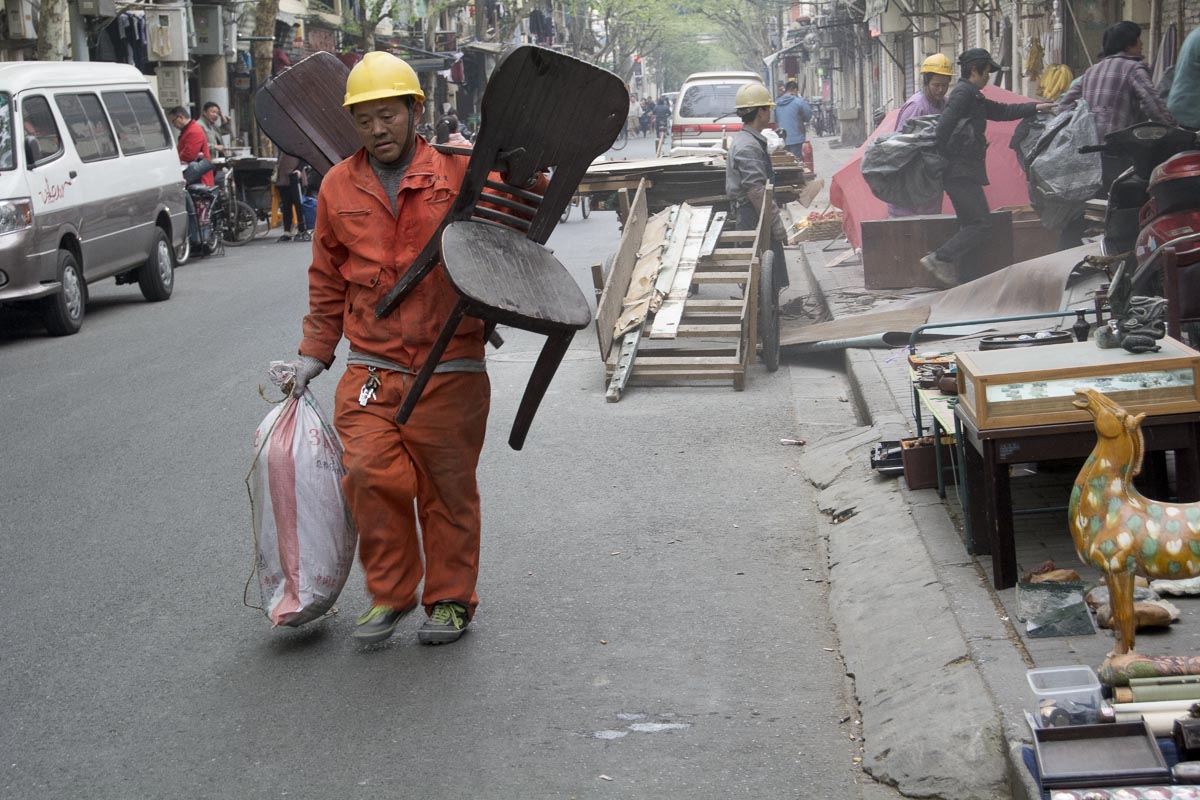
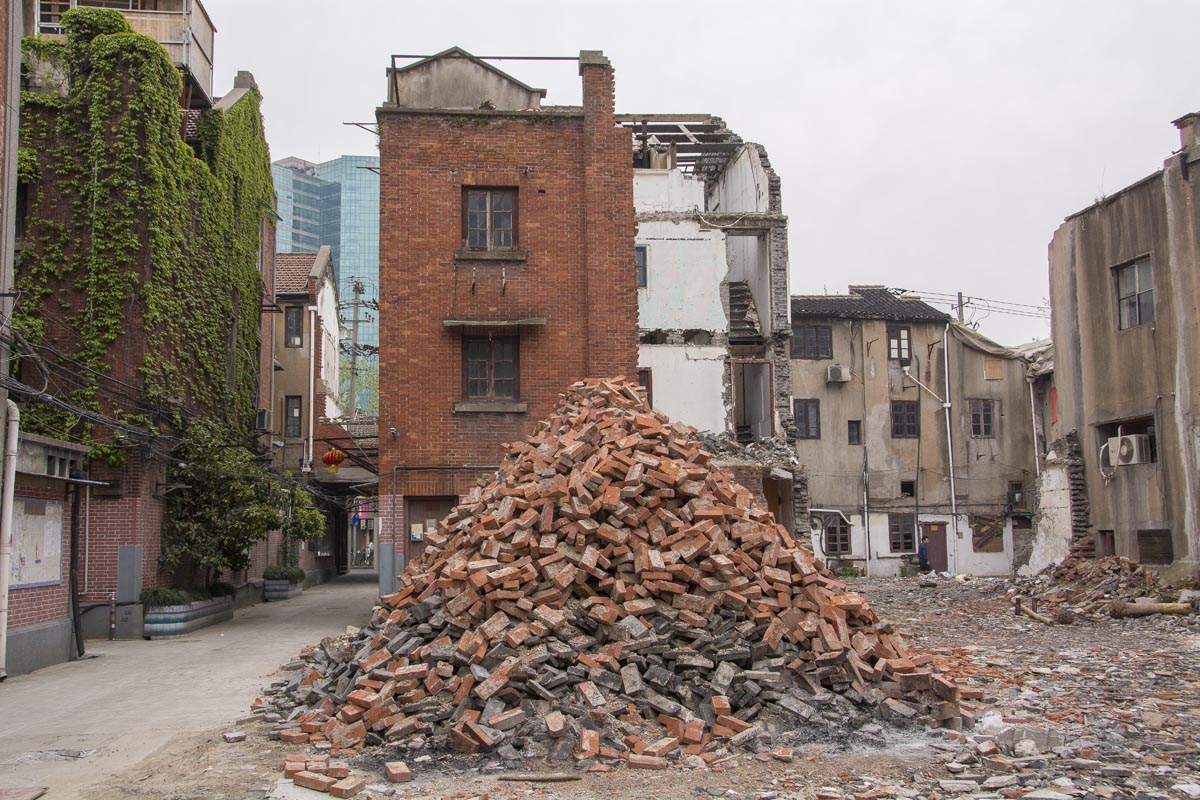
The central Shanghai district of Laoximen popular with tourists for its antique market and traditional stores, is being demolished to make way for modern development.

Demolition amidst the market stalls Last days of the 'Shikumen' community End of days for an 'Art Deco' neigbourhood

A stone’s throw from Laoximen in the trendy Shanghai neighbourhood of Xintiandi, a humble shikumen building has been preserved as a museum commemorating the first national assembly of the Chinese Communist Party in July 1921. A humble wooden table surrounded by stools in the cramped room where the meeting took place is these days a closely guarded national treasure highlighting the humble origins of the Chinese Communist Party, less than a century ago.

Years later, in May 1949, the Communists entered the city and the opposing Nationalists under Chiang Kai Shek fled to Taiwan. Dynamic, sometimes tumultuous change is nothing new to Shanghai. In 1533, during the Ming dynasty, a wall was built around the growing city to protect residents from attack by Japanese pirates. The eight-metre high structure, demolished back in 1912 had ten gates into the city. The West gate (in Chinese called ‘Laoximen’) is now a central district, the city having since expanded far beyond its former limits.

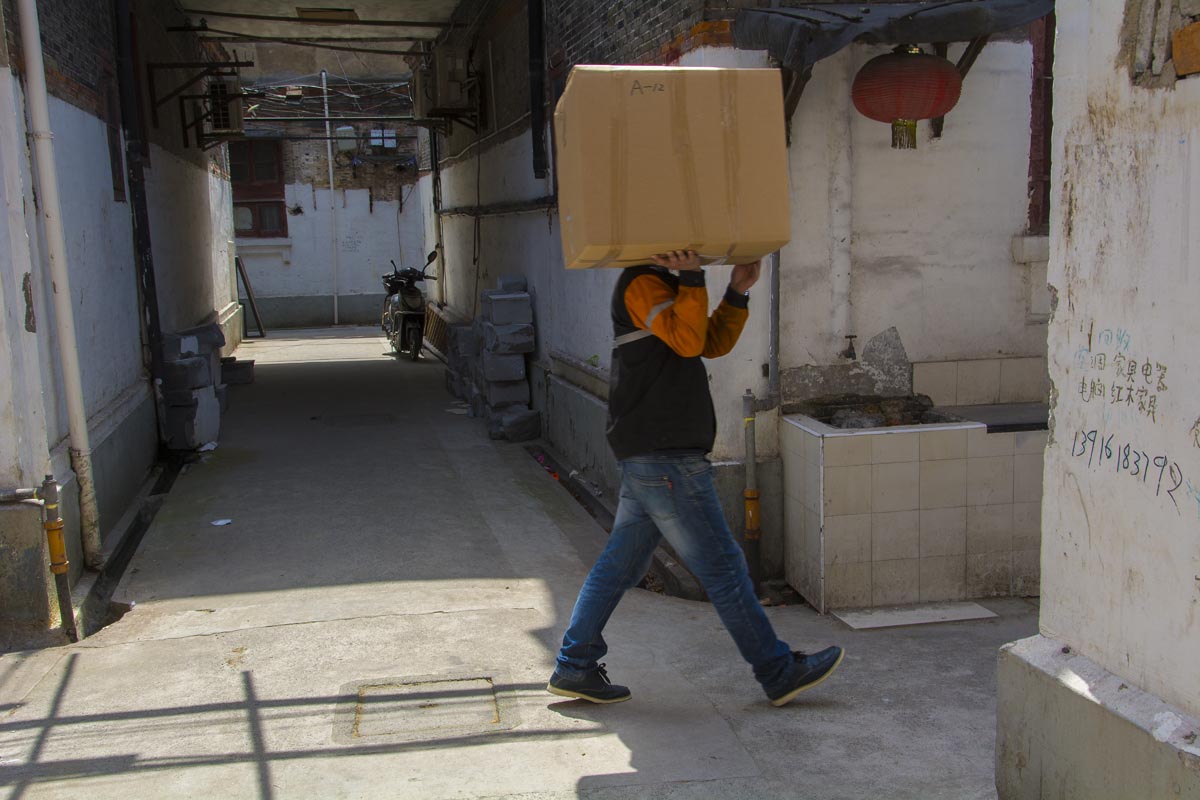
In the early 1920s, competing colonial powers built showcase banking buildings and hotels on the riverside ‘Bund’ promenade. Meanwhile Laoximen followed central Shanghai in building ornate blocks of tenements. Sweeping away the old wooden houses these new buildings for the booming middle classes were a fusion of traditional Chinese styles and architectural features introduced by the colonists, distinctive narrow streets and courtyards which became known as the ‘shikumen’ style, literally translated as ‘Stone Gate’.

Shikumen would become Shanghai’s dominant style of residential architecture. Porcelain kitchen sinks were typically located in the narrow alleys outside the houses. Ornate stone features such as door lintels, roof gables, and carved wooden doors and windows increasingly adorned the brick buildings. Later, as styles evolved, buildings displayed art-deco features. Despite the increasing assault of modern development on its historical buildings, Shanghai still claims more art deco architecture than virtually any other city in the world. However, holding on to the styles and themes of the past is a battle that some traditionalists are finding it increasingly hard to fight.

Under the Arches

A group of three locals sit under the arched entrance to the condemned Jian Road shikumen discussing their bleak housing problems. ‘It’s more than a hundred years since our ancestors came’, says Mr Zhou. ‘I moved here half a century ago,’ says Mrs Zhang.

Now in the narrow alleys there is an eerie silence and most homes are boarded up, their doorways covered in paper seals to prevent re-entry. The elderly Mr Zhou confirms that, ‘most of the people have already moved.’ He explains how people were encouraged by the developers to leave: ‘People were asked to move by January and those who fail to do so will not receive a compensation bonus.’ ‘Yeah we will stay here,’ says the group in unison. ‘They could not give the compensation we want so we won’t move,’ they declare defiantly.

The group is angry that the size of their properties by floor area is not being fully considered in their claims. ‘Let me give you an example,’ says Mrs Zhang. ‘Some apartments have two kitchens, but they won’t count this area, nor the balcony or bathroom. Only the living-room and bedrooms are counted.’ With information scarce, the neighbours are in the dark about their rights and compensation procedures. ‘I don’t know who they are,’ says Mrs Zhang when asked who she is negotiating with. ‘There is no government department to talk to about it. It’s the developers who talk to us, who say they are working through the government.’ She says that the developers asked them for trust, but she remains suspicious saying, ‘They don’t have a license and we don’t have a contract with them.’ She suspects that the government just wants to get rid of her at minimum cost: ‘We went to the municipal government office and they turned a blind eye to it. They only care how to sell the lot.’

The group claims the developer offered them less than half of the square metre value for equivalent properties in the area. On top of this, they have to pay 20 per cent to the government for leasehold management: ‘We moved here before the communist liberation,’ says Zhang, ‘then the houses became government property, and thus we became tenants.’

Care Homes

Mr Ye was born in Shanghai and moved to his alley house in the Jian Road shikumen in 1972. He works from home as an electrical repairman. Sitting in his small living room he explains his housing worries as he sorts through a box of old electrical components. ‘We have to move soon. Actually it’s overdue. We need to negotiate,’ he explains. ‘I have a very serious disease, haemophilia, and can only go to the hospital here for medical care. The Royal family in Britain also had that disease. People who have it are like a glass which is very fragile.’ He explains that he has to visit the nearby hospital every day for treatment. Commenting on the eviction process Mr Ye says, ‘They were quite brutal before. They would force you out by cutting the supply of water and electricity. It’s better now, at least they won’t cut you off and demolish forcefully when you’re overdue.’

When asked whether the government will provide alternative housing Ye says, ‘Yes they do but it’s quite far away. Still in Shanghai but in remote areas. We have to negotiate – we need special treatment because of my disease. It’s really expensive to buy a new house around here, the compensation is not enough. We [he and his wife] are both disabled, we can’t walk like normal people. She can walk but not a long way. It’s very convenient to live here but not the new place. I can only get medical care in the centre.

Other hospitals don’t have the medicine for my disease. I told the authorities about our difficulties but they said according to the policy, people will only get houses in suburban districts. People did get houses in the centre in the old days but not now.’ Ye flicks through a thick catalogue of new build high-rise properties available in the outlying suburbs just being constructed. It’s as thick as a telephone directory. All of them are far from the centre. Time is pressing and Ye and his wife feel stressed about the urgency. He’s worried that the lack of attention he is receiving could be life threatening: ‘They have to make sure it’s not worse than we are now. Otherwise it’s risking my life, because I can’t get medical care in time. It will take at least two hours to get to the hospital from there. I’ll already be dead after two hours.’

Market Forces

Cutting through Laoximen is Dongtai street which has been an antiques and flea-market since the 1980s. Featured in many Shanghai guidebooks, it is a popular destination for tourists and locals who come to browse the 150 or so stalls hunting for bargains. The market is itself a product of the city’s immigrants. Many of the items for sale are cast-offs from settled migrants who no longer have need of them. At one stall a huge pile of old suitcases is testament to the stream of workers who continue to arrive. At another, a pile of Mao’s Little Red Book are unwanted reminders of the disastrous cultural revolution which most wish only to forget. Mao-era posters and magazines display fading images of communist realism – a bygone ideological dream, sitting among the crumbling façades of the shikumen buildings with their colonial story.

Many of the traders have moved no further than this market street since they originally arrived. Stallholders describe how the trinkets they had brought from their home-towns proved popular, and soon they were bringing more stock from visits home to the provinces. Among the personal ephemera can be found fixtures and fittings from glazed roof tiles to enamel door numbers, all scavenged from the rolling demolition of the old shikumen neighbourhoods across the city.

Now scavengers are busy in Laoximen itself. In a bitter irony, signs from the neighbouring streets can be found on the stalls, themselves slated to soon be swept away. As the still-ongoing demolition of Laoximen proceeded alley by alley, courtyard by courtyard, the bulldozers and demolition crews grew ever closer to the market itself, still open for business. Most recently, the houses that lined Dongtai street were smashed apart leaving only the street stalls remaining, surrounded by piles of rubble.

One stallholder explained, ‘We are moving very soon. We have meetings in a couple of days. At the end of the month we will know how much we are going to get compensated. I’m not sure where I am going. I am selling everything at a cheap rate.’ In one block, already long since flattened, people hold out in a last solitary building – their semi-demolished home – refusing to relocate, holding out for better compensation. Stallholder Mr Guo says, ‘They asked me to close before the end of March, but I protested. I need compensation you know – it’s normal. It’s reasonable if you stop my life source. The government sells the land for billions of money. We need our life.’

An indigenous woman who has been selling ethnic textiles for 30 years says she has no idea where she will move her stall to and she asks for suggestions. Mr Guo says he looked into another market option but the rents were high in comparison. Most stallholders say they will not be moving on, but instead will be closing their stalls for the last time the day the market ends. As a result many have reduced prices to clear their stock. ‘Now it’s a clearance sale, I can’t take everything home, my home is full of antiques already,’ says Mr Guo, and he explains that now he plans to travel the world. It presents a big life change: ‘I was born here and have been here all my life.’ A neighbouring stallholder says, ‘I’ve been here about 20 years. The street has finished its historical mission.’ For many inhabitants of ‘old’ Shanghai, that same sentiment applies to the city as a whole.

Commissioned by Geographical Magazine
  • DSC4003, Rod Harbinson
  • DSC4017 1, Rod Harbinson
  • DSC4021 1, Rod Harbinson
  • DSC4674 1, Rod Harbinson
  • DSC4116 1, Rod Harbinson
  • DSC4117, Rod Harbinson
  • DSC4120, Rod Harbinson
  • DSC4078 1, Rod Harbinson
  • DSC4139 1, Rod Harbinson
  • DSC4099, Rod Harbinson
  • DSC4167 1, Rod Harbinson
  • DSC4196 1, Rod Harbinson
  • DSC4334 1, Rod Harbinson
  • DSC4369 1, Rod Harbinson
  • DSC4357, Rod Harbinson
  • DSC4377, Rod Harbinson
  • DSC4380 1, Rod Harbinson
  • DSC4396 1, Rod Harbinson
  • DSC4406, Rod Harbinson
  • DSC4442 1, Rod Harbinson
  • DSC4445 1, Rod Harbinson
  • DSC4462, Rod Harbinson
  • DSC4491 1, Rod Harbinson
  • DSC4499, Rod Harbinson
  • DSC4508 2, Rod Harbinson
  • DSC4500 2, Rod Harbinson
  • DSC4516 2, Rod Harbinson
  • DSC4531 1, Rod Harbinson
  • DSC4535, Rod Harbinson
  • DSC4538, Rod Harbinson
  • DSC4541 1, Rod Harbinson
  • DSC4564 1, Rod Harbinson
  • DSC4604, Rod Harbinson
  • DSC4705, Rod Harbinson
  • DSC4699 1, Rod Harbinson
  • DSC4548 1, Rod Harbinson
  • DSC4743 1, Rod Harbinson
  • DSC4716 1, Rod Harbinson
  • DSC4745 1, Rod Harbinson
  • DSC4779 1, Rod Harbinson
  • DSC4771 1, Rod Harbinson
  • DSC4805, Rod Harbinson
error: Content is protected !!